
Complete Guide
The global challenge of feeding an ever-growing population, compounded by climate change and resource scarcity, demands revolutionary solutions. Artificial Intelligence (AI)-driven precision agriculture emerges as a pivotal force, poised to redefine our food systems and significantly bolster global food security enhancement programs by 2025. This comprehensive guide delves into how advanced AI technologies, from predictive analytics to autonomous robotics, are transforming traditional farming practices, optimizing resource utilization, and building more resilient food supply chains. Prepare to explore the transformative potential of AI in cultivating a sustainable and secure future for our planet's food supply.
The Urgent Imperative: Food Security in a Changing World
Ensuring adequate, safe, and nutritious food for all remains one of humanity's most pressing challenges. With a global population projected to reach nearly 10 billion by 2050, and agricultural land shrinking due to urbanization and degradation, the pressure on existing food systems is immense. Climate change introduces unprecedented volatility, with extreme weather events, shifting rainfall patterns, and new pest threats impacting crop yields and livestock health. Traditional farming methods, while foundational, often struggle with inefficiencies, excessive resource consumption, and vulnerability to environmental shocks. This necessitates a fundamental shift towards more intelligent, sustainable, and adaptive agricultural practices.
Traditional Farming's Limitations and the Digital Shift
- Resource Inefficiency: Conventional agriculture often involves the indiscriminate application of water, fertilizers, and pesticides, leading to waste, environmental pollution, and increased costs.
- Yield Variability: Without precise data, farmers make generalized decisions, leading to inconsistent yields and susceptibility to localized issues like soil nutrient deficiencies or pest outbreaks.
- Labor Shortages: Many agricultural regions face a declining workforce, making labor-intensive practices unsustainable in the long run.
- Climate Vulnerability: Traditional systems are highly exposed to climate variability, with limited capacity for proactive adaptation or mitigation.
- Lack of Data-Driven Insights: Decisions are often based on experience and observation rather than real-time, granular data, limiting optimization potential.
The digital revolution offers a powerful antidote. The integration of smart farming technologies, particularly AI, provides the tools to overcome these limitations, moving agriculture from a reactive, resource-heavy model to a proactive, data-driven, and highly efficient ecosystem. This transition is not merely an upgrade; it's a fundamental reimagining of how we grow, distribute, and consume food, directly impacting global food security.
AI-Driven Precision Agriculture: A Paradigm Shift
Precision agriculture leverages technology to observe, measure, and respond to variability in crops, soil, and animal health. When infused with Artificial Intelligence, this approach becomes incredibly powerful, enabling farmers to make hyper-localized, data-informed decisions that maximize productivity while minimizing environmental impact. AI algorithms can process vast datasets from sensors, drones, satellites, and historical records to provide actionable insights far beyond human capacity.
Key Pillars of AI in Modern Agriculture
- Predictive Analytics & Crop Monitoring: AI models analyze historical weather data, soil conditions, and past yield performance to predict future crop outcomes with remarkable accuracy. This allows farmers to anticipate potential issues like drought or disease outbreaks, optimizing planting schedules and resource allocation. AI-powered systems can monitor crop health in real-time, detecting subtle changes in plant stress or nutrient deficiencies before they become visible to the human eye.
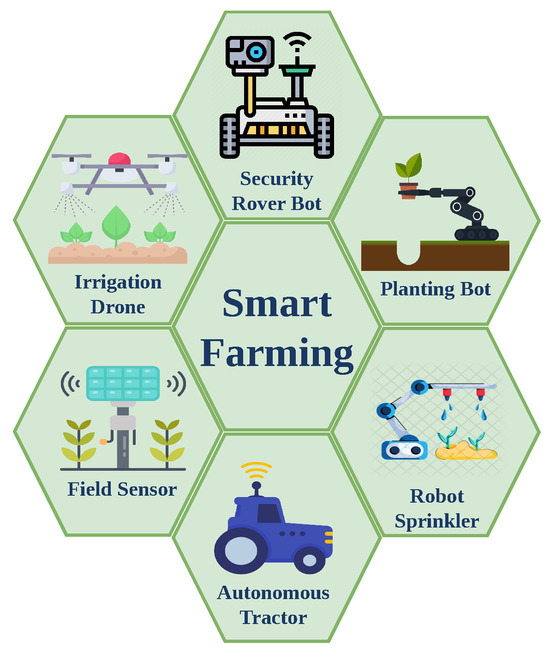
- Automated Robotics & Drones: Autonomous robots are revolutionizing tasks from planting and weeding to harvesting, reducing labor costs and increasing efficiency. Drones equipped with multispectral cameras provide aerial views of fields, collecting data on crop vigor, irrigation needs, and pest infestations. AI then processes this imagery to pinpoint specific areas requiring attention, enabling targeted intervention rather than blanket application.
- IoT & Sensor Networks: The Internet of Things (IoT) forms the backbone of precision agriculture, with networks of sensors collecting real-time data on soil moisture, temperature, pH levels, nutrient content, and even livestock health. AI algorithms interpret this continuous stream of data, providing farmers with a comprehensive understanding of their farm's micro-environments and individual animal well-being.
- Computer Vision & Machine Learning: AI-powered computer vision systems can identify weeds, diseases, and pests with high precision, differentiating them from crops. Machine learning algorithms can then recommend specific, localized treatments, minimizing chemical use. This technology also aids in quality control during harvesting and sorting, ensuring only the best produce reaches the market.
- Resource Optimization: Perhaps one of the most critical contributions of AI in agriculture is its ability to optimize resource use. AI can determine the exact amount of water, fertilizer, or pesticide needed for specific sections of a field, leading to significant reductions in consumption and waste. This not only cuts costs for farmers but also dramatically reduces agriculture's environmental footprint, contributing to long-term sustainability.
Enhancing Global Food Security Through AI Programs (Post-2025 Vision)
The integration of AI into agricultural practices is not just about individual farm efficiency; it's about building a robust, resilient, and equitable global food system. By 2025, we anticipate sophisticated AI programs playing a central role in mitigating food shortages, improving nutritional outcomes, and adapting to climate change impacts worldwide. These programs will extend beyond the farm gate, influencing supply chains, market access, and policy decisions.
Strategic Programs and Initiatives
- Global Agricultural Intelligence Platforms: AI will power centralized data platforms that aggregate information from farms worldwide, including weather patterns, soil health, crop yields, and market prices. These platforms will provide invaluable insights for governments, NGOs, and food agencies to forecast supply and demand, identify potential food insecure regions, and coordinate humanitarian aid effectively. Such systems can serve as powerful early warning systems for food crises.
- AI-Powered Climate Resilience Tools: With increasing climate volatility, AI will be crucial in developing adaptive strategies. Programs will leverage AI to predict extreme weather events, recommend drought-resistant crop varieties, optimize irrigation schedules based on real-time evaporation rates, and even suggest climate-smart farming practices tailored to specific microclimates. This proactive approach enhances the resilience of food systems against climate shocks.
- Sustainable Resource Management & Conservation: AI-driven programs will promote the sustainable use of natural resources. This includes optimizing water usage through precise irrigation scheduling, reducing nutrient runoff by only applying fertilizers where needed, and minimizing land degradation through intelligent crop rotation and conservation tillage recommendations. These programs will be vital for long-term environmental health and agricultural productivity.
- Optimizing Food Supply Chains and Reducing Waste: AI can analyze complex supply chain data to identify bottlenecks, predict demand fluctuations, and optimize logistics from farm to fork. This leads to reduced food loss and waste, a critical component of global food security. AI can also facilitate better market access for smallholder farmers by connecting them directly to buyers, reducing intermediaries and improving profitability. Consider exploring our insights on AI in supply chain management.
- Capacity Building & Farmer Empowerment Initiatives: Crucially, AI programs must be accessible and beneficial to all farmers, including smallholder farmers in developing regions. Initiatives will focus on developing user-friendly AI tools, providing training and technical support, and establishing affordable access to AI technologies and data. This empowers farmers with knowledge and tools, enabling them to make better decisions and improve their livelihoods.
Actionable Steps for Stakeholders: Cultivating the Future
Realizing the full potential of AI in agriculture requires concerted efforts from various stakeholders. Each group has a vital role to play in accelerating adoption and ensuring equitable benefits.
For Policymakers and Governments
- Invest in Digital Infrastructure: Prioritize rural broadband connectivity and reliable energy access, which are foundational for AI adoption.
- Develop Supportive Policy Frameworks: Create regulations that encourage agricultural AI innovation, address data privacy concerns, and provide incentives for sustainable farming practices.
- Fund Research & Development: Allocate resources for R&D in AI applications specific to local agricultural challenges and climate conditions.
- Facilitate Data Sharing: Establish secure, standardized platforms for agricultural data sharing (with appropriate privacy safeguards) to foster innovation and collaboration.
- Promote Education & Training: Integrate AI and digital literacy into agricultural education programs and provide extension services for farmers.
For Farmers and Agricultural Businesses
- Embrace Lifelong Learning: Stay informed about emerging AI technologies and their potential benefits. Participate in training programs and workshops.
- Start Small, Scale Up: Begin with manageable AI solutions that address immediate pain points (e.g., soil sensors, basic yield monitoring) and gradually integrate more complex systems.
- Invest in Data Collection: Understand the importance of accurate data. Implement consistent data collection practices on your farm.
- Seek Expert Advice: Partner with agricultural technology providers, consultants, and academic institutions to navigate the complex landscape of AI solutions.
- Collaborate: Join farmer cooperatives or industry associations to share knowledge, pool resources, and collectively advocate for supportive policies. Discover strategies for smart farm investment.
For Technology Developers and Innovators
- Focus on User-Friendliness: Design AI solutions that are intuitive, easy to integrate with existing farm equipment, and provide clear, actionable insights.
- Address Affordability: Develop cost-effective solutions, potentially through subscription models or shared access, especially for small and medium-sized farms.
- Ensure Data Security & Privacy: Build robust systems that protect sensitive agricultural data and ensure transparency in data usage.
- Develop Ethical AI: Consider the societal impacts, including potential job displacement, and work towards solutions that create new opportunities and ensure equitable access.
- Collaborate with Farmers: Involve farmers in the design and testing phases to ensure solutions meet real-world needs and challenges.
Challenges and Ethical Considerations in AI Agriculture
While the promise of AI in agriculture is immense, its widespread adoption is not without hurdles. Addressing these challenges proactively is essential for a successful transition.
Navigating the Hurdles for Widespread Adoption
- High Initial Costs: The investment in AI hardware (sensors, robots, drones) and software can be prohibitive for many farmers, particularly smallholders.
- Digital Divide: Lack of internet connectivity and digital literacy in rural areas, especially in developing countries, poses a significant barrier to access.
- Data Ownership & Privacy: Concerns about who owns the vast amounts of data collected on farms and how it is used are paramount. Farmers need assurances that their data will not be exploited.
- Job Displacement: Automation through AI and robotics could potentially displace agricultural labor, necessitating strategies for retraining and creating new job opportunities.
- Technical Expertise: Operating and maintaining sophisticated AI systems requires a certain level of technical expertise that may not be readily available in farming communities.
- Interoperability: Ensuring different AI systems, sensors, and farm machinery can seamlessly communicate with each other is a complex challenge that needs industry-wide standards.
Addressing these challenges requires a multi-faceted approach involving public-private partnerships, targeted subsidies, comprehensive training programs, and robust regulatory frameworks that prioritize fairness and equity. The goal is to ensure that the benefits of AI-driven precision agriculture are accessible to all, fostering truly sustainable food systems.
The Road Ahead: A Collaborative Ecosystem
The future of AI-driven precision agriculture and its role in global food security enhancement programs by 2025 is not a distant dream but a rapidly unfolding reality. It necessitates a collaborative ecosystem where technology developers, farmers, policymakers, researchers, and consumers work in synergy. By harnessing the power of AI, we can move towards a future where food production is not only more efficient and environmentally friendly but also more equitable and resilient against unforeseen challenges.
Future Outlook and Transformative Potential
The transformative potential of AI in agriculture extends far beyond current applications. We can anticipate hyper-personalized farming, where every plant receives optimal care, and predictive models become so advanced they can anticipate micro-climatic shifts. This will lead to unprecedented levels of crop yield optimization, significant reductions in food waste, and a more robust global food supply chain. The integration of AI will not only secure our food future but also foster a new era of environmental stewardship, making agriculture a powerful solution to climate change rather than a contributor. The journey towards a truly AI-powered agricultural landscape is an exciting one, promising a world where food scarcity becomes a relic of the past.
Frequently Asked Questions
How does AI-driven precision agriculture directly enhance global food security?
AI-driven precision agriculture enhances global food security by optimizing resource use (water, fertilizer), increasing crop yields, reducing food waste throughout the supply chain, and providing early warning systems for climate shocks or pest outbreaks. By making farming more efficient and resilient, it helps ensure a stable and sufficient food supply for a growing global population, directly addressing the core challenges of global food security.
What specific AI technologies are most impactful in modern farming?
The most impactful AI technologies include machine learning for predictive analytics (e.g., yield forecasting, disease prediction), computer vision for crop and pest identification, robotics for automated tasks (planting, harvesting), and IoT sensor networks for real-time data collection on soil and plant health. These technologies collectively enable data-driven decision-making and precise interventions in the field, leading to significant improvements in agricultural sustainability.
Are there ethical concerns regarding AI adoption in agriculture, and how are they being addressed?
Yes, ethical concerns include data ownership and privacy, potential job displacement due to automation, and ensuring equitable access to technology for smallholder farmers. These are being addressed through developing clear data governance policies, investing in retraining programs for agricultural workers, and creating affordable, user-friendly AI solutions tailored for diverse farming contexts. International collaboration is also crucial to establish fair and inclusive frameworks for AI in agriculture.
What role do smallholder farmers play in the future of AI-driven agriculture?
Smallholder farmers are crucial to global food security, producing a significant portion of the world's food. Their role in AI-driven agriculture is to be active beneficiaries and adopters of accessible, low-cost AI solutions. Programs focus on empowering them with tools for better decision-making, improved resource management, and enhanced market access. Initiatives include developing mobile-first AI applications, providing localized training, and fostering community-based technology hubs to ensure they are not left behind in the smart farming revolution.

0 Komentar