
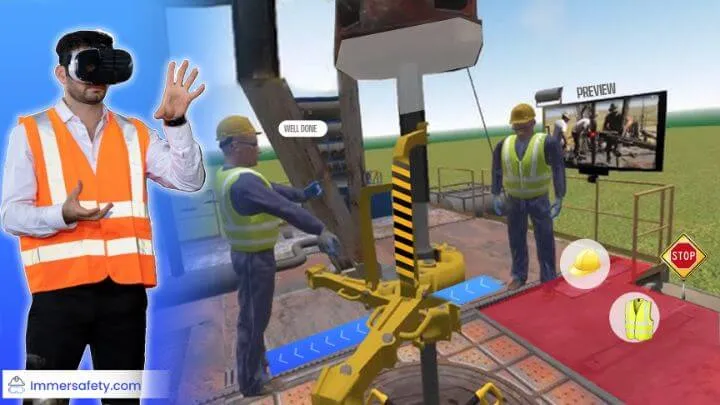
Revolutionizing Construction Safety Training: The Power of Virtual Reality
The construction industry, a cornerstone of global development, inherently carries significant risks. Ensuring robust construction safety training is paramount, yet traditional methods often fall short in preparing workers for real-world hazards. Enter virtual reality (VR): a groundbreaking technology poised to transform how we approach workplace safety. This article delves into how virtual reality in construction safety training offers an unparalleled, immersive experience, significantly enhancing hazard recognition, improving safety protocols, and ultimately creating safer construction sites. Discover the immense potential of VR to mitigate risks, reduce incidents, and foster a proactive safety culture within this vital sector.
The Critical Need for Advanced Construction Safety Training
Construction sites are dynamic, complex environments where dangers lurk around every corner. From falls from heights and electrocution to struck-by incidents and equipment malfunctions, the potential for serious injury or fatality is ever-present. Traditional safety training, while foundational, often relies on classroom lectures, videos, and static demonstrations. While valuable, these methods frequently lack the immersive, experiential learning necessary to truly embed critical safety behaviors and rapid decision-making skills. Workers might understand concepts theoretically but struggle to apply them effectively under pressure in a high-stakes environment. This gap in practical preparedness highlights a critical need for more advanced, engaging, and realistic training methodologies. The integration of digital twins and advanced simulation technology is quickly becoming a non-negotiable for forward-thinking construction firms.
Limitations of Traditional Safety Training Methods
- Lack of Immersion: Passive learning through slides or videos struggles to replicate the sensory input and dynamic nature of a construction site.
- Limited Practical Application: Trainees rarely get hands-on experience with dangerous scenarios without putting themselves at risk.
- Retention Challenges: Information learned passively is often forgotten quickly, especially under stress.
- Standardized Scenarios: Difficult to tailor training to specific site conditions or unique risks without significant logistical challenges.
- High Costs for Real-World Drills: Conducting realistic drills on active sites can be disruptive, expensive, and still carry inherent risks.
How Virtual Reality Transforms Safety Education
Virtual reality in construction safety training fundamentally changes the learning paradigm. Instead of merely observing, trainees are placed directly within a highly realistic, simulated construction environment. They can interact with tools, machinery, and other virtual workers, experiencing potential hazards and practicing appropriate responses without any real-world danger. This level of immersion fosters a deeper understanding of safety protocols and consequences, leading to significantly improved retention and practical application of knowledge.
Key Advantages of VR for Construction Safety
- Immersive Learning Experience: VR headsets transport users into a detailed, 3D replica of a construction site, complete with realistic sounds and visual cues. This high level of immersion enhances engagement and makes learning more memorable.
- Safe Experimentation with Hazards: Trainees can practice responding to dangerous situations, such as a falling object, an electrical short, or a trench collapse, in a completely safe, controlled environment. They learn from mistakes without real-world repercussions.
- Enhanced Hazard Recognition: Repeated exposure to various hazards in a simulated environment sharpens a worker's ability to identify risks quickly and accurately in real life. This is crucial for preventing incidents before they occur.
- Standardized & Consistent Training: VR ensures every trainee receives the exact same high-quality training experience, regardless of location or instructor. This consistency helps maintain uniform safety standards across projects.
- Cost-Effectiveness & Scalability: While initial setup costs exist, VR training can be more cost-effective in the long run than traditional methods requiring physical mock-ups, travel, and site downtime. It's also easily scalable to train large workforces.
- Data-Driven Insights: VR platforms can track trainee performance, identifying areas where individuals or groups struggle. This data allows for personalized feedback and targeted retraining, optimizing the learning process.
Practical Applications of VR in Construction Safety Training
The versatility of virtual reality for safety training allows for the simulation of a wide array of scenarios, catering to diverse aspects of construction safety. This technology goes beyond basic awareness, enabling deep dives into specific, high-risk tasks and emergency responses.
Simulating High-Risk Scenarios
- Fall Protection Training: Workers can experience simulations of working at heights, identifying unprotected edges, and correctly using personal fall arrest systems. They can even simulate a fall to understand the forces involved and the importance of proper equipment.
- Equipment Operation Safety: Trainees can practice operating heavy machinery like excavators, cranes, or forklifts in a virtual environment, learning safe operating procedures, load limits, and blind spots without risking damage or injury. This includes mastering pre-operation checks and emergency shutdown procedures.
- Confined Space Entry: VR can realistically simulate the hazards of confined spaces, including oxygen deficiency, toxic gases, and entrapment. Trainees learn proper ventilation techniques, atmospheric monitoring, and rescue protocols.
- Electrical Safety Procedures: Users can practice lockout/tagout procedures, identify live wires, and understand safe distances from power lines, all within a risk-free virtual setting.
- Emergency Response Drills: From fire evacuation to responding to a medical emergency or a structural collapse, VR can simulate complex emergency scenarios, allowing workers to practice their roles and responsibilities under pressure.
- Hazardous Material Handling: Training on the safe storage, handling, and disposal of hazardous materials, including spill response and personal protective equipment (PPE) usage, can be effectively conducted in VR.
Beyond specific tasks, VR also excels in teaching crucial soft skills development relevant to safety, such as effective communication during emergencies, teamwork in high-stress situations, and quick decision-making under pressure. This holistic approach ensures workers are not just technically proficient but also mentally prepared for the dynamic nature of construction sites.
Implementing Virtual Reality Safety Programs: Best Practices
Successfully integrating VR safety solutions into an existing training curriculum requires careful planning and execution. It's not simply about purchasing hardware; it's about strategically designing content and processes to maximize impact and achieve desired safety outcomes.
Key Steps for Effective VR Implementation
- Identify Specific Training Needs: Begin by conducting a thorough risk assessment of your construction sites. Pinpoint the most common incidents, highest-risk tasks, and areas where traditional training falls short. This will guide the development of relevant VR scenarios.
- Content Development or Acquisition: Decide whether to develop custom VR content tailored to your specific site and equipment or to license off-the-shelf solutions. Custom content offers greater relevance but requires more investment.
- Hardware Procurement: Invest in reliable VR headsets (e.g., Oculus Quest, HTC Vive) and powerful enough computers if tethered systems are chosen. Ensure sufficient units for your training needs.
- Integration with Existing Curriculum: VR should complement, not entirely replace, traditional training. Use it for experiential learning, reinforcing classroom knowledge, and practical skill development.
- Pilot Programs and Feedback: Before full rollout, conduct pilot programs with a small group of trainees. Gather feedback on the experience, clarity of scenarios, and effectiveness. Use this input to refine the program.
- Trainee Onboarding and Support: Provide clear instructions on how to use the VR equipment. Offer technical support and guidance to ensure a smooth, frustration-free experience.
- Performance Tracking and Analysis: Utilize the data generated by VR simulations to track individual and group performance. Analyze trends to identify common errors and areas for improvement in both training and on-site practices.
- Regular Content Updates: Construction practices, regulations, and technologies evolve. Ensure your VR content is regularly updated to reflect the latest safety standards and site conditions.
Consider partnering with an experienced VR content developer specializing in industrial training to ensure high-quality, realistic simulations that align with your specific safety protocols and operational procedures. For deeper insights, explore resources on VR applications in industrial settings.
Measuring the Impact and Return on Investment (ROI)
While the qualitative benefits of immersive training are clear, demonstrating a tangible return on investment (ROI) is crucial for widespread adoption. Companies are increasingly recognizing that investments in advanced safety technologies like VR are not just expenses but strategic decisions that yield significant long-term savings.
Quantifiable Benefits of VR Safety Training
- Reduced Incident Rates: The most direct measure. Improved hazard recognition and practical skills lead to fewer accidents, injuries, and fatalities.
- Lower Insurance Premiums: A demonstrably safer workplace can result in lower workers' compensation claims and reduced insurance costs.
- Decreased Downtime: Fewer accidents mean less disruption to project schedules and reduced costs associated with investigations, clean-up, and worker replacement.
- Improved Productivity: A safer, more confident workforce is generally more productive. Workers who feel secure are less distracted by safety concerns.
- Enhanced Worker Morale and Retention: Investing in cutting-edge safety training demonstrates a company's commitment to its employees' well-being, fostering loyalty and attracting top talent.
- Compliance and Reputation: Meeting and exceeding safety regulations through advanced training enhances a company's reputation, potentially leading to more project bids and partnerships.
A recent study by XYZ Research Group indicated that companies implementing VR safety training saw a 20% reduction in minor incidents and a 15% decrease in lost-time injuries within the first year. This underscores the significant financial and human capital benefits that accrue from embracing advanced simulation technology for workplace safety. The initial investment in virtual reality in construction safety training pays dividends through a safer, more efficient, and more compliant operation.
The Future of Construction Safety: Beyond VR
While virtual reality in construction safety training is already making a profound impact, the evolution of technology promises even more sophisticated solutions. The convergence of VR with other emerging technologies, such as augmented reality (AR) and artificial intelligence (AI), points towards a future where safety training is not just immersive but also predictive and seamlessly integrated into daily operations.
Emerging Trends and Technologies
- Augmented Reality (AR) for On-Site Guidance: AR overlays digital information onto the real world. Imagine workers wearing AR glasses that highlight potential hazards in real-time, provide step-by-step instructions for complex tasks, or even display emergency escape routes.
- AI-Powered Adaptive Training: AI can analyze a trainee's performance in VR and adapt the training program in real-time, focusing on areas where they struggle. This personalized learning path maximizes efficiency and effectiveness.
- Wearable Sensors and Biometrics: Integration of VR with wearable sensors could monitor a worker's stress levels or fatigue during simulations, providing insights into their readiness for high-pressure situations.
- Full Haptic Feedback Systems: Advanced haptic suits could provide realistic tactile feedback, allowing workers to "feel" the vibrations of machinery or the impact of a falling object in the virtual world, further enhancing immersion and realism.
These advancements promise to make construction site simulation even more realistic and responsive, pushing the boundaries of what's possible in preventative safety measures. Construction firms that embrace these innovations will not only lead in safety but also gain a significant competitive edge in the market. To learn more about related innovations, consider exploring topics on AI in construction.
Frequently Asked Questions
What are the primary benefits of using virtual reality for construction safety training?
The primary benefits of virtual reality in construction safety training include providing a safe environment for practicing responses to high-risk scenarios, significantly enhancing hazard recognition skills through immersive experiences, improving knowledge retention, and ensuring consistent, standardized training across the workforce. It also offers a cost-effective alternative to real-world drills and provides valuable data on trainee performance, leading to more targeted safety interventions.
How does VR improve hazard recognition on construction sites?
VR improves hazard recognition by placing trainees directly into realistic, interactive construction site simulations. Through repeated exposure to various dangers like unguarded openings, unstable structures, or improperly stored materials, workers learn to quickly identify and react to potential risks. This experiential learning is far more effective than passive observation, sharpening their ability to spot and mitigate hazards in real-world situations before incidents occur.
Is VR training cost-effective for construction companies?
Yes, while there's an initial investment in hardware and content development, VR training can be highly cost-effective in the long run. It reduces expenses associated with traditional training methods (travel, physical mock-ups, site downtime). More importantly, by reducing accidents, injuries, and fatalities, VR training leads to significant savings in workers' compensation claims, insurance premiums, lost productivity, and potential legal costs, demonstrating a strong return on investment for enhancing workplace safety.
What types of safety scenarios can be simulated with VR?
Virtual reality for safety training can simulate a wide range of critical scenarios, including fall protection, safe operation of heavy equipment (e.g., cranes, excavators), confined space entry and rescue, electrical safety procedures (like lockout/tagout), hazardous material handling, and emergency response drills (e.g., fire evacuation, first aid). This versatility allows companies to tailor training to their specific operational risks and compliance requirements.
How do companies implement VR safety training programs?
Implementing VR safety training programs typically involves several steps: first, identifying specific training needs through a thorough risk assessment; second, developing or acquiring relevant VR content; third, procuring VR hardware; fourth, integrating VR sessions with existing safety curricula; fifth, conducting pilot programs for feedback; and finally, tracking trainee performance for continuous improvement. Companies often partner with specialized VR content developers to ensure high-quality, industry-specific simulations.

0 Komentar