
Machine Learning for Predicting Energy Demand in Smart Homes: Revolutionizing Efficiency and Savings
The quest for optimized living environments has led to a profound transformation in how we interact with our homes. At the forefront of this revolution is the integration of advanced technologies, particularly machine learning for predicting energy demand in smart homes. This innovative application of artificial intelligence is not merely a futuristic concept; it's a present-day imperative for achieving unparalleled energy efficiency, significant cost savings, and a reduced carbon footprint. Imagine a home that intelligently anticipates your energy needs, adjusting systems proactively to minimize waste without compromising comfort. This article delves into how machine learning is making this vision a reality, offering deep insights for homeowners, technology enthusiasts, and industry professionals alike.
The Imperative of Predictive Energy Demand Forecasting
In an era defined by fluctuating energy prices and a growing emphasis on environmental sustainability, inefficient energy consumption in residential buildings represents a critical challenge. Traditional energy management approaches often rely on fixed schedules or reactive adjustments, leading to substantial waste. Smart homes, equipped with an array of IoT devices, generate vast amounts of data—from appliance usage patterns to occupancy sensors and external weather conditions. This data, however, remains largely untapped without sophisticated analytical tools.
This is precisely where machine learning algorithms step in. By analyzing historical consumption data, environmental factors, and even consumer behavior, ML models can learn complex patterns and predict future energy demand with remarkable accuracy. This predictive capability empowers a home's energy management system to make informed decisions, transitioning from a reactive to a proactive operational model. The benefits are multifaceted, encompassing not only direct cost savings on utility bills but also contributing to broader smart grid stability by reducing peak demand and optimizing resource allocation. Moreover, a more efficient home directly translates to a lower carbon footprint, aligning with global sustainability goals.
How Machine Learning Transforms Energy Consumption
The core principle behind using machine learning for energy prediction lies in its ability to identify intricate relationships within diverse datasets that are often imperceptible to human analysis. The process typically involves several key stages:
- Data Collection: Gathering vast quantities of real-time data from smart meters, smart thermostats, connected appliances, occupancy sensors, external weather APIs, and even local grid information.
- Data Preprocessing: Cleaning, normalizing, and transforming raw data into a format suitable for ML algorithms. This includes handling missing values, outliers, and creating relevant features (e.g., time of day, day of week, seasonal indicators).
- Model Training: Feeding the processed historical data into chosen machine learning models. The model "learns" from this data, identifying patterns and correlations between various inputs (e.g., temperature, time, occupancy) and energy consumption.
- Prediction and Optimization: Once trained, the model can then take current and forecasted data (e.g., upcoming weather, scheduled routines) to predict future energy demand. These predictions inform the home automation system, allowing it to dynamically adjust HVAC settings, lighting, and appliance schedules to meet anticipated needs most efficiently.
This iterative process allows the system to continuously improve its accuracy as more data becomes available, making the smart home progressively "smarter" and more energy-efficient over time. The integration of data analytics is fundamental to unlocking these capabilities.
Key Machine Learning Models for Energy Prediction
The choice of machine learning model is critical for effective energy demand prediction. Different algorithms excel at identifying various types of patterns and relationships within data. Here are some of the most commonly employed predictive models:
Regression Models
- Linear Regression: A foundational model that predicts a continuous output (energy consumption) based on a linear relationship with input variables. While simple, it serves as a good baseline and is computationally efficient.
- Polynomial Regression: Extends linear regression by allowing for non-linear relationships between inputs and outputs, capturing more complex patterns.
- Support Vector Regression (SVR): Effective for both linear and non-linear data, SVR aims to find a function that deviates from the true targets by a margin, making it robust to outliers.
Time Series Models
Given that energy consumption is inherently time-dependent, time series specific models are often highly effective:
- ARIMA (AutoRegressive Integrated Moving Average): A classical statistical model widely used for forecasting time series data. It accounts for trends, seasonality, and irregular fluctuations.
- SARIMA (Seasonal ARIMA): An extension of ARIMA that explicitly handles seasonal components in the data, which is crucial for daily or weekly energy patterns.
- Prophet: Developed by Facebook, Prophet is an open-source forecasting tool that is robust to missing data and shifts in trends, making it very practical for real-world applications with less-than-perfect data.
Neural Networks
For highly complex and non-linear relationships, deep learning models, a subset of neural networks, offer superior performance:
- Recurrent Neural Networks (RNNs): Designed to process sequential data, making them ideal for time series forecasting. They have a "memory" that allows them to consider previous inputs.
- Long Short-Term Memory (LSTM) Networks: A special type of RNN particularly adept at learning long-term dependencies, overcoming some of the limitations of standard RNNs. LSTMs are highly effective for predicting energy demand over extended periods.
Ensemble Methods
These methods combine multiple models to achieve better predictive performance than any single model:
- Random Forest: Builds multiple decision trees and merges their predictions. It's robust, versatile, and can handle various data types.
- Gradient Boosting (e.g., XGBoost, LightGBM): Builds models sequentially, with each new model correcting errors made by previous ones. These often achieve state-of-the-art results in predictive accuracy.
Data Sources and Preprocessing for Accurate Forecasts
The adage "garbage in, garbage out" holds particularly true for machine learning. The accuracy of energy demand predictions is heavily reliant on the quality and comprehensiveness of the input data. Key data sources include:
- Smart Meters: Provide granular, often 15-minute or hourly, electricity consumption data.
- Weather Data: Temperature, humidity, solar radiation, wind speed, and cloud cover significantly impact heating, ventilation, and air conditioning (HVAC) loads. Integration with weather APIs is crucial.
- Occupancy Sensors: Data on whether a home is occupied or vacant, and at what times, directly influences lighting and HVAC needs.
- Appliance Usage Data: From smart refrigerators, washing machines, and other IoT devices, indicating their operational cycles.
- User Schedules/Preferences: Calendar data, preferred comfort settings, and routines can be explicitly fed into the model or implicitly learned.
- Local Grid Information: Real-time electricity prices, grid load, and availability of renewable energy sources can inform optimal consumption strategies.
Effective data preprocessing is non-negotiable. This involves:
- Missing Data Imputation: Filling in gaps using statistical methods or predictive models.
- Outlier Detection and Handling: Identifying and managing anomalous data points that could skew model training.
- Normalization/Scaling: Ensuring all features contribute equally to the model by bringing them to a similar scale.
- Feature Engineering: Creating new, more informative features from existing ones (e.g., "is_weekend," "hour_of_day," "temperature_difference_from_previous_hour"). This step often has the most significant impact on model performance.
Real-World Applications and Benefits in Smart Homes
The practical implications of machine learning for predicting energy demand in smart homes extend far beyond mere forecasting. These predictions enable a host of intelligent automations that directly translate to enhanced living and substantial savings:
- Dynamic HVAC Control: Based on predicted occupancy, external temperature, and user preferences, the system can pre-cool or pre-heat the home efficiently, avoiding energy spikes and ensuring comfort when needed. For instance, if the model predicts a hot afternoon and your return from work, it might slightly pre-cool the house during off-peak hours.
- Optimized Appliance Scheduling: High-consumption appliances like washing machines or dishwashers can be automatically scheduled to run during off-peak electricity hours or when renewable energy generation (e.g., solar panels) is at its peak, significantly reducing utility costs.
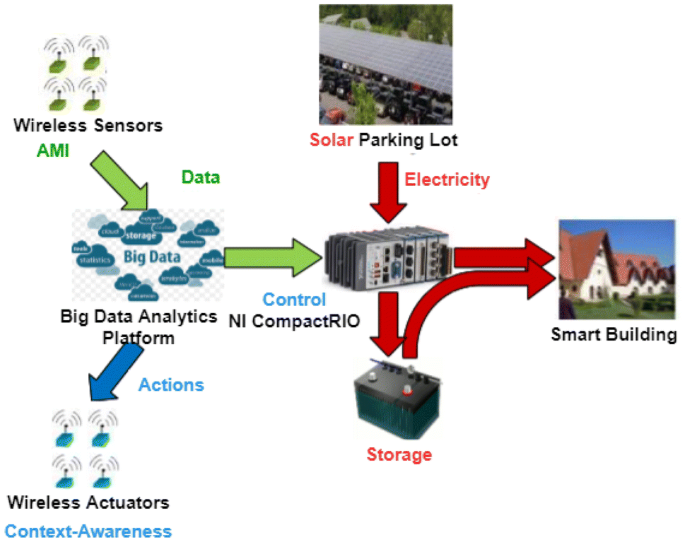
- Integration with Renewable Energy Sources: For homes with solar panels or battery storage, ML can predict energy generation and consumption, optimizing the use of self-generated power and minimizing reliance on the grid, or even selling excess power back during peak demand times. This is crucial for maximizing the return on investment for solar energy systems.
- Proactive Energy Management and Alerts: The system can alert homeowners to unusual energy consumption patterns that might indicate a faulty appliance or an open window. It can also suggest optimal energy-saving strategies based on learned consumer behavior.
- Personalized Comfort Profiles: Over time, the ML model learns individual preferences, creating a truly personalized home automation experience that balances comfort with efficiency without constant manual adjustments.
Overcoming Challenges in ML-Based Energy Prediction
While the potential is immense, implementing robust ML-driven energy prediction systems in smart homes comes with its own set of challenges:
- Data Privacy and Security: Collecting granular data on household activities raises significant privacy concerns. Secure data storage, anonymization, and adherence to privacy regulations are paramount.
- Model Complexity and Interpretability: Advanced models like deep neural networks can be "black boxes," making it difficult to understand why a particular prediction was made. For critical applications, some level of interpretability is desirable.
- Computational Resources: Training complex ML models, especially with large datasets, requires significant computational power, which might be a constraint for on-device processing in smaller smart home hubs. Cloud-based solutions often alleviate this.
- Variability in Consumer Behavior: Human behavior is inherently unpredictable. Sudden changes in routine, guests, or unexpected events can introduce noise and reduce prediction accuracy. Models need to be adaptive and continuously learn from new data.
- Scalability and Interoperability: Ensuring that different IoT devices and platforms can seamlessly communicate and share data is an ongoing challenge in the fragmented smart home ecosystem.
- Data Quality: Sensor malfunctions, network outages, or incorrect initial configurations can lead to erroneous data, severely impacting model performance. Robust data validation and cleaning pipelines are essential.
Implementing ML for Your Smart Home: Practical Advice
For homeowners and developers looking to leverage machine learning for predicting energy demand in smart homes, here are some actionable tips:
- Start with Data Collection: Ensure your smart home devices (smart meters, thermostats, smart plugs) are actively collecting and storing data. Many platforms offer data export functionalities. Prioritize devices that provide granular, time-series data.
- Choose the Right Platform: Consider integrated smart home ecosystems (e.g., Home Assistant, SmartThings) that offer APIs or integrations for data access and automation. For more advanced users, platforms like OpenHAB or custom solutions with tools like Python and TensorFlow/PyTorch offer greater flexibility.
- Focus on Key Features: When building or using a model, prioritize features that have a direct impact on energy consumption:
- Time-based: Hour of day, day of week, month, holidays.
- Environmental: Outdoor temperature, humidity, solar radiation.
- Occupancy: Presence/absence detection (if available).
- Historical Consumption: Lagged values of energy consumption from previous hours/days.
- Iterate and Refine: Machine learning is an iterative process. Start with simpler models, analyze their performance, and gradually introduce complexity. Regularly re-train your models with new data to maintain accuracy as your habits or environment change.
- Monitor Performance: Continuously monitor the accuracy of your predictions. Compare predicted consumption with actual consumption. If errors increase, it might be time to re-evaluate your data sources or model.
- Integrate with Automation: The true power of prediction lies in automation. Link your ML model's output to your home automation routines. For example, if the model predicts low solar generation and high demand, your system could automatically delay non-essential appliance usage.
- Consider Edge Computing: For privacy-sensitive data or faster response times, explore solutions that process data on local devices (edge computing) rather than solely relying on cloud servers.
The Future of Smart Home Energy Management
The trajectory for machine learning for predicting energy demand in smart homes is one of continuous advancement. We can anticipate more sophisticated models capable of understanding highly nuanced consumer behavior and adapting to unforeseen circumstances with greater resilience. The convergence of ML with other emerging technologies, such as edge AI and federated learning, promises to enhance data privacy and reduce latency, enabling even more responsive and intelligent energy management systems. Furthermore, deeper integration with the broader smart grid will facilitate bidirectional communication, allowing homes not just to optimize their own consumption but also to contribute actively to grid stability and resilience, potentially even earning credits by selling excess energy during peak demand. This holistic approach will play a pivotal role in achieving widespread energy efficiency and significantly reducing the global carbon footprint.
Frequently Asked Questions
What is machine learning for energy prediction in smart homes?
Machine learning for energy prediction in smart homes involves using artificial intelligence algorithms to analyze historical and real-time data (like past energy usage, weather forecasts, occupancy patterns, and appliance states) to accurately forecast future electricity or gas demand within a residence. This predictive capability enables the smart home system to make intelligent decisions, such as pre-heating or cooling, optimizing appliance schedules, or managing renewable energy sources, leading to enhanced energy efficiency and cost savings.
How does machine learning help save money on energy bills?
Machine learning helps save money by optimizing energy consumption. By accurately predicting future energy needs, it allows your home automation system to avoid wasteful energy use. For example, it can automatically adjust your thermostat to pre-condition your home during off-peak hours when electricity is cheaper, or delay running high-power appliances until solar generation is maximal. This proactive energy management ensures you use energy when it's most affordable and efficient, directly reducing your utility bills and contributing to a lower carbon footprint.
What type of data is needed for effective energy demand prediction?
Effective energy demand prediction relies on a variety of data sources. Key inputs include granular historical energy consumption data from smart meters, real-time and forecasted weather data (temperature, humidity, solar radiation), occupancy information from sensors, and data from specific IoT devices like smart thermostats and appliances. Information on user preferences, calendar schedules, and even local grid pricing signals can also significantly improve the accuracy of predictive models and inform optimal energy management systems.
Is my data secure when using machine learning for energy prediction?
Data security and privacy are critical concerns. Reputable smart home platforms and machine learning solutions prioritize the protection of your personal and energy consumption data. They typically employ robust encryption, anonymization techniques, and secure servers to safeguard information. When choosing a system, look for certifications, clear privacy policies, and a strong track record in data security. Many systems also offer on-device processing (edge computing) to minimize data transfer to the cloud, enhancing privacy further.
Can I implement machine learning-based energy prediction in my existing smart home?
Yes, in many cases, you can. If your existing smart home system supports data logging from smart meters and other IoT devices, and offers integration points (APIs or open platforms like Home Assistant), you can often integrate or develop your own machine learning models. There are open-source tools and frameworks available for data collection, model training, and automation. However, the complexity can vary depending on your technical expertise and the openness of your current smart home ecosystem. Many newer commercial energy management systems are also beginning to offer built-in AI-powered prediction features.

0 Komentar