
Blockchain Solutions for International Remittances: Revolutionizing Global Money Transfers
The landscape of global finance is undergoing a profound transformation, and at its forefront are blockchain solutions for international remittances. For far too long, sending money across borders has been plagued by high fees, slow transaction times, and a lack of transparency. This has disproportionately affected millions of migrant workers and their families who rely on timely and affordable cross-border payments. This article delves into how cutting-edge blockchain technology is not just offering an alternative, but fundamentally reshaping the future of global money transfers, providing a more efficient, secure, and inclusive financial ecosystem.
The Persistent Challenges of Traditional Remittances
Despite advancements in digital banking, the traditional international remittance system remains remarkably inefficient. It's a complex web of intermediary banks, SWIFT codes, and legacy infrastructure that introduces multiple points of failure and significant costs. Understanding these pain points is crucial to appreciating the transformative potential of distributed ledger technology (DLT).
High Costs and Hidden Fees
- Exorbitant Transaction Fees: Senders often face fees ranging from 5% to 10% of the principal amount, eroding the value of hard-earned money. These fees are often compounded by multiple banks involved in the transfer chain.
- Unfavorable Exchange Rates: Beyond direct fees, traditional services frequently apply unfavorable exchange rates, adding another layer of hidden costs that further diminish the recipient's payout.
- Intermediary Charges: Each bank in the correspondent banking network charges a fee, accumulating costs before the funds reach their destination.
Sluggish Transaction Speeds and Limited Access
- Delayed Transfers: International bank transfers can take days, sometimes even weeks, to clear. This delay is particularly critical for families relying on these funds for urgent needs like medical expenses or daily sustenance.
- Operating Hours Restrictions: Traditional systems are bound by banking hours and weekend closures, meaning transfers initiated outside these times are delayed until the next business day.
- Exclusion of the Unbanked: A significant portion of the global population, particularly in developing nations, lacks access to formal banking services, making traditional remittances inaccessible or extremely difficult to manage.
Lack of Transparency and Security Concerns
- Opaque Tracking: Senders often have limited visibility into the status of their transfers, leading to uncertainty and frustration. Tracking systems, if available, are often rudimentary.
- Fraud and Error Risks: The multi-party nature of traditional transfers increases the risk of human error, fraud, or even funds getting lost in transit. Reversing or correcting errors can be a complex and lengthy process.
How Blockchain Technology Revolutionizes International Remittances
Blockchain technology, the underlying innovation behind cryptocurrencies like Bitcoin and Ethereum, offers a paradigm shift in how value is transferred globally. By creating a decentralized, immutable, and transparent ledger, it eliminates many of the inefficiencies inherent in traditional systems. This foundational shift is what makes blockchain solutions for international remittances so compelling.
Decentralization and Disintermediation
At its core, blockchain removes the need for central authorities or multiple intermediaries. Instead of routing money through a series of banks, transactions are directly sent from sender to recipient on a peer-to-peer network. This disintermediation is key to reducing costs and speeding up transfers. Imagine sending money directly from your digital wallet to your family's digital wallet, bypassing several layers of financial institutions.
Immutable and Transparent Records
Every transaction on a blockchain is recorded as a 'block' and added to a 'chain' of previous transactions. Once recorded, it cannot be altered or deleted, creating an immutable record. This inherent transparency means that all participants in the network can verify transactions, drastically reducing fraud and increasing trust. Senders can track their funds in real-time with complete visibility.
Smart Contracts for Automated Efficiency
Smart contracts are self-executing contracts with the terms of the agreement directly written into code. In the context of remittances, smart contracts can automate compliance checks (KYC/AML), trigger payments upon certain conditions being met, or even manage foreign exchange conversions. This automation streamlines processes, reduces manual errors, and further accelerates transaction times.
Leveraging Digital Currencies and Stablecoins
Instead of traditional fiat currencies, many blockchain remittance solutions utilize digital currencies. While volatile cryptocurrencies like Bitcoin can be used, the focus is increasingly shifting towards stablecoins. These are cryptocurrencies pegged to a stable asset like the US dollar, minimizing price volatility and making them ideal for value transfer. This allows for near-instant conversion and transfer without the risks associated with price fluctuations.
Key Benefits of Blockchain-Powered Remittances
The application of blockchain technology to cross-border payments brings a multitude of tangible benefits, directly addressing the shortcomings of legacy systems.
Significant Cost Reduction
- Elimination of Intermediary Fees: By cutting out correspondent banks and their associated charges, blockchain networks drastically reduce the overall cost of a transaction.
- Competitive Exchange Rates: Blockchain-based platforms often offer more favorable and transparent exchange rates, as they operate with lower overheads and can access interbank rates more directly.
- Reduced Operational Expenses: Automation through smart contracts and reduced manual processing lower the operational costs for service providers, savings that can be passed on to the consumer.
Unprecedented Speed and Real-Time Transfers
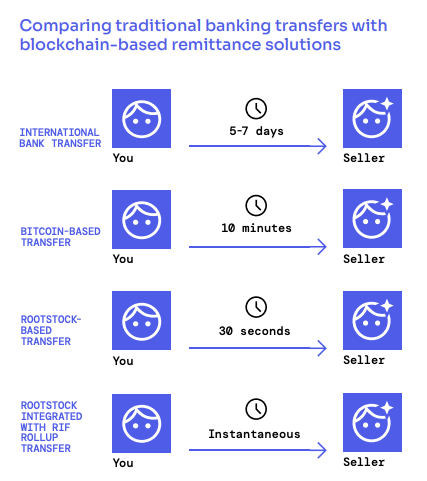
- Near-Instant Settlement: Unlike traditional systems that rely on batch processing, blockchain transactions are processed and settled in minutes, or even seconds, regardless of geographical distance or time zones. This capability for real-time transfers is a game-changer.
- 24/7 Availability: Blockchain networks operate continuously, meaning transfers can be initiated and completed at any time, day or night, including weekends and holidays.
Enhanced Transparency and Security
- End-to-End Tracking: Every transaction is recorded on a public or permissioned ledger, allowing senders and recipients to track the funds' journey with complete transparency.
- Fraud Prevention: The cryptographic security and immutability of blockchain make it incredibly difficult to tamper with transactions, significantly reducing the risk of fraud.
- Reduced Error Rates: Automation and smart contracts minimize human intervention, leading to fewer errors in processing and routing.
Greater Accessibility and Financial Inclusion
- Reaching the Unbanked: Blockchain solutions can be accessed via mobile phones and digital wallets, bypassing the need for traditional bank accounts. This opens up financial services to millions in underserved regions, fostering true financial inclusion.
- Lower Minimum Transfer Amounts: The reduced cost per transaction often allows for smaller remittance amounts to be sent economically, catering to the diverse needs of users.
Streamlined Compliance and Regulatory Adherence
- Automated KYC/AML: Smart contracts can embed Know Your Customer (KYC) and Anti-Money Laundering (AML) checks directly into the transaction flow, automating compliance processes and reducing manual overhead.
- Auditability: The transparent and immutable nature of blockchain records provides an easily auditable trail for regulators, potentially simplifying compliance reporting for financial institutions leveraging the technology.
Challenges and Considerations for Blockchain Adoption in Remittances
While the benefits are compelling, the widespread adoption of blockchain solutions for international remittances faces several hurdles that need to be addressed.
Regulatory Uncertainty and Compliance
- Varying Global Regulations: The legal and regulatory frameworks for cryptocurrencies and blockchain vary widely across different countries, creating a complex compliance landscape. Some nations are embracing it, while others are hesitant or outright restrictive.
- Anti-Money Laundering (AML) Concerns: While blockchain offers transparency, the pseudonymous nature of some digital assets raises concerns for regulators regarding illicit financial flows, requiring robust AML solutions.
Scalability and Network Congestion
- Transaction Throughput: Some public blockchains, like early versions of Ethereum, have faced challenges with scalability, leading to network congestion and higher transaction fees during peak times. Solutions like Layer 2 scaling and new consensus mechanisms are addressing this, but it remains a consideration.
- Latency Issues: While generally faster, complex transactions involving multiple smart contract interactions or cross-chain operations can still experience some latency.
Volatility of Digital Assets
- Price Fluctuations: If volatile cryptocurrencies are used directly for remittances without immediate conversion to stable assets, senders and recipients can be exposed to significant price risk between the time of sending and receiving. This is why stablecoins are gaining traction.
User Adoption, Education, and Interoperability
- Technological Literacy: A significant portion of the target demographic for remittances may lack the digital literacy required to use blockchain wallets and platforms effectively. User-friendly interfaces and extensive education are crucial.
- Interoperability Between Blockchains: The existence of multiple, often incompatible, blockchain networks (e.g., Bitcoin, Ethereum, Solana, Ripple) can create fragmentation. Solutions for seamless transfer between different chains are still evolving.
- On-Ramp/Off-Ramp Challenges: Converting fiat currency to digital assets (on-ramp) and back again (off-ramp) can still be cumbersome and costly in many regions, limiting accessibility.
Practical Applications and Leading Solutions
Several companies and protocols are already leveraging blockchain to disrupt the remittance market, demonstrating the practical viability of these solutions.
RippleNet and XRP
Ripple is one of the pioneers in using blockchain for cross-border payments. Their solution, RippleNet, connects banks and payment providers, allowing them to send money globally using XRP as a bridge currency. XRP enables low-cost, real-time international payments, bypassing traditional correspondent banking. This focus on institutional adoption has made Ripple a significant player in the enterprise remittance space.
Stablecoin-Based Platforms
Many emerging platforms are building their remittance services on top of stablecoins like USDT, USDC, or even new country-specific stablecoins. These platforms offer the speed and low cost of blockchain without the price volatility of traditional cryptocurrencies. Users send fiat, which is converted to stablecoins, transferred rapidly, and then converted back to fiat upon receipt.
Decentralized Finance (DeFi) Protocols
While still nascent for mainstream remittances, DeFi protocols offer a glimpse into a fully decentralized future. Users can leverage DeFi lending protocols or decentralized exchanges to send value globally with minimal fees and complete transparency, though the user experience is still complex for non-technical users.
Central Bank Digital Currencies (CBDCs)
Looking further ahead, the development of Central Bank Digital Currencies (CBDCs) by various nations could significantly impact international remittances. If CBDCs are built on blockchain or DLT, they could enable seamless, instant, and low-cost cross-border transfers directly between central banks or authorized institutions, potentially revolutionizing the entire global financial system.
Actionable Tips for Adopting Blockchain Remittance Solutions
For individuals and businesses looking to leverage the benefits of blockchain for money transfers, here are some practical tips:
- Research Reputable Platforms: Not all blockchain remittance services are created equal. Look for platforms with strong security protocols, transparent fee structures, and positive user reviews. Check their regulatory compliance and licenses in your region.
- Understand the Fee Structure: While generally lower, understand how fees are calculated (fixed, percentage, network fees) and compare them with traditional services. Pay attention to exchange rate markups.
- Consider Stablecoins: For stability, prioritize services that use stablecoins for transfers, or ensure instant conversion from volatile cryptocurrencies to fiat upon receipt to mitigate price risk.
- Prioritize User Experience: Opt for platforms with intuitive interfaces, clear instructions, and responsive customer support, especially if you are new to digital wallets or blockchain technology.
- Educate Yourself and Recipients: Ensure both the sender and recipient understand how to use the digital wallet, manage private keys (if applicable), and convert digital assets to local currency.
- Start Small: For your first transfer, consider sending a smaller amount to test the service and ensure the process works smoothly before committing larger sums.
- Verify Recipient Details Carefully: Blockchain transactions are irreversible. Double-check wallet addresses and recipient details meticulously before confirming any transfer.
- Look for On-Ramp/Off-Ramp Accessibility: Ensure the service provides convenient and affordable ways to convert local currency to digital assets and vice-versa in both the sending and receiving countries.
The Future Outlook for Blockchain in Remittances
The trajectory for blockchain solutions for international remittances is undeniably upward. As regulatory clarity improves, technological scalability advances, and user interfaces become more intuitive, the adoption rate is expected to accelerate dramatically. We are moving towards a future where instant, low-cost, and transparent global money transfers are the norm, not the exception.
Innovations like interoperable blockchain networks, more widely accepted stablecoins, and the eventual rollout of CBDCs will further cement blockchain's role. Financial institutions are increasingly exploring partnerships with blockchain firms, recognizing the imperative to adapt to this new paradigm. The ultimate beneficiaries will be the millions of individuals and businesses worldwide who depend on efficient and affordable cross-border payments, truly democratizing access to global financial services.
Frequently Asked Questions
What is the primary advantage of using blockchain for international remittances?
The primary advantage of using blockchain for international remittances is the significant reduction in costs and transaction times. By eliminating intermediaries and leveraging a decentralized network, funds can be transferred globally at a fraction of the cost and in minutes, rather than days, compared to traditional banking systems. This also comes with enhanced transparency and security.
Are blockchain remittances safe and secure?
Yes, blockchain remittances are inherently designed to be highly secure. Transactions are cryptographically secured and recorded on an immutable ledger, making them incredibly difficult to tamper with or reverse fraudulently. However, the security also depends on the user's practices, such as safeguarding their digital wallet's private keys and using reputable platforms.
Do I need to own cryptocurrency to send money via blockchain remittances?
Not necessarily. While some services might require you to directly hold and send cryptocurrency, many modern blockchain solutions for international remittances abstract this complexity away. You can often pay in your local fiat currency, which the platform then converts to a stablecoin or other digital asset for the transfer, and then converts back to the recipient's local fiat currency upon arrival. This makes the process similar to traditional digital money transfers, but with blockchain's underlying benefits.
What are stablecoins and why are they important for blockchain remittances?
Stablecoins are a type of cryptocurrency designed to minimize price volatility by being pegged to a stable asset, such as the U.S. dollar or gold. They are crucial for blockchain solutions for international remittances because they combine the speed and low cost of blockchain transactions with the price stability required for reliable value transfer, mitigating the risks associated with volatile cryptocurrencies.
Is blockchain regulated for international money transfers?
The regulatory landscape for blockchain solutions for international remittances is evolving and varies significantly by country. Many jurisdictions are developing specific regulations for digital assets and virtual asset service providers (VASPs) to address concerns related to anti-money laundering (AML) and counter-terrorism financing (CTF). Reputable blockchain remittance platforms adhere to these evolving regulations to ensure compliance and build trust.

0 Komentar