
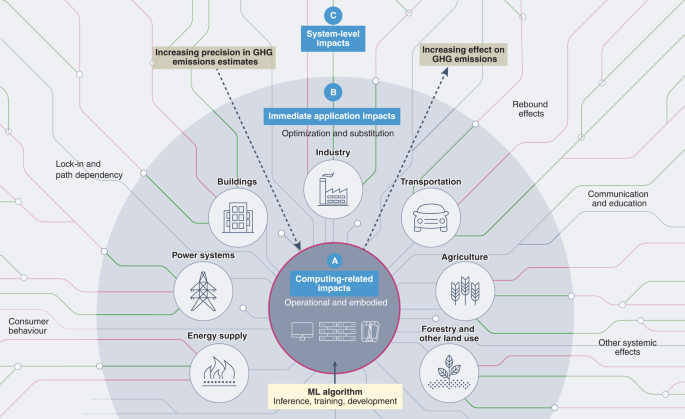
Artificial Intelligence in Climate Change Mitigation and Adaptation: A Transformative Force
The global climate crisis demands urgent, innovative solutions, and at the forefront of this battle stands artificial intelligence (AI). Far beyond being a mere technological advancement, AI is emerging as an indispensable tool, offering unprecedented capabilities to understand, predict, and combat the escalating threats posed by a changing climate. From optimizing renewable energy systems to enabling precise disaster prediction and fostering climate resilience, the integration of intelligent systems is revolutionizing our approach to both climate change mitigation and adaptation. This comprehensive guide delves into how AI, through its sophisticated data analysis and predictive power, is becoming a pivotal ally in securing a sustainable future for our planet.
The Indispensable Role of AI in Climate Action
The sheer volume and complexity of data related to climate systems, energy consumption, and environmental patterns are overwhelming for human analysis alone. This is where artificial intelligence excels. AI, particularly through its branches like machine learning and deep learning, can process vast datasets, identify intricate patterns, and make highly accurate predictions that are critical for effective climate action. Its ability to learn from data and continuously improve its performance makes it an invaluable asset in a rapidly evolving environmental landscape. The deployment of AI technologies offers the potential to accelerate climate solutions, making them more efficient, scalable, and impactful globally.
Unlocking Data-Driven Insights
- Predictive Analytics: AI algorithms can forecast climate trends, predict the impact of various interventions, and model future scenarios with remarkable accuracy. This allows policymakers and scientists to make informed decisions.
- Pattern Recognition: From identifying sources of emissions to recognizing early signs of environmental degradation, AI excels at spotting subtle patterns that might be missed by traditional methods.
- Optimization Capabilities: AI can find the most efficient pathways for energy distribution, resource allocation, and operational processes, leading to significant reductions in waste and emissions.
AI for Climate Change Mitigation: Curbing Emissions and Beyond
Climate change mitigation focuses on reducing the flow of greenhouse gases into the atmosphere. Artificial intelligence provides powerful tools to achieve this by enhancing efficiency, optimizing resource use, and accelerating the transition to a low-carbon economy. The application of intelligent systems spans across various sectors, demonstrating its versatility in addressing the root causes of global warming.
Optimizing Renewable Energy Systems
The transition to renewable energy sources like solar and wind power is critical, but their intermittent nature poses challenges. AI is instrumental in overcoming these hurdles:
- Renewable Energy Optimization: AI can predict weather patterns with high accuracy, allowing for more precise forecasting of solar and wind energy generation. This enables grid operators to better integrate renewables and minimize reliance on fossil fuel backups.
- Smart Grids and Energy Efficiency: AI-powered smart grids can balance energy supply and demand in real-time, reducing waste and improving grid stability. AI analyzes consumption patterns in homes and industries, suggesting optimal energy usage and identifying opportunities for efficiency improvements, such as intelligent HVAC systems and smart lighting.
- Energy Storage Management: AI optimizes the charging and discharging cycles of battery storage systems, ensuring that renewable energy is stored when abundant and released when demand is high, thereby maximizing its utility and reducing costs.
Enhancing Carbon Reduction Strategies Across Sectors
Beyond energy, AI contributes significantly to reducing carbon footprints in other major sectors:
- Industrial Efficiency: AI can optimize industrial processes, from manufacturing to chemical production, by predicting equipment failures, fine-tuning operational parameters, and reducing energy consumption and waste. This leads to substantial reductions in industrial emissions.
- Sustainable Transportation: AI optimizes traffic flow, designs more efficient public transport routes, and enables the development of autonomous vehicles that can reduce fuel consumption. It also assists in planning logistics for freight, minimizing empty runs and optimizing delivery routes.
- Carbon Sequestration and Monitoring: AI can help monitor natural carbon sinks like forests and oceans, assessing their health and capacity for carbon absorption. Furthermore, AI is being explored to optimize the efficiency of nascent carbon capture and storage (CCS) technologies, identifying optimal locations and operational parameters for greater effectiveness.
Revolutionizing Sustainable Agriculture and Land Use
Agriculture is both a contributor to and a victim of climate change. AI offers solutions for a more sustainable approach:
- Precision Agriculture: AI-powered systems analyze soil data, weather forecasts, and crop health using satellite imagery and drone technology. This allows farmers to optimize irrigation, fertilizer application, and pest control, reducing resource waste and emissions. This form of precision agriculture minimizes the environmental impact of farming while maximizing yields.
- Deforestation Monitoring: AI can process vast amounts of satellite imagery to detect illegal logging and deforestation in real-time, enabling faster response from authorities and conservation efforts. This is crucial for protecting vital carbon sinks.
- Sustainable Resource Management: AI helps in managing water resources more efficiently for agriculture, predicting droughts and floods, and optimizing water distribution to minimize waste.
AI for Climate Change Adaptation: Building Resilience
Even with aggressive mitigation efforts, the climate has already changed, necessitating robust adaptation strategies. AI is a powerful ally in building resilience against the unavoidable impacts of climate change, from extreme weather to rising sea levels.
Advanced Disaster Prediction and Early Warning
One of AI's most impactful contributions is its ability to forecast and respond to natural disasters:
- Extreme Weather Events Forecasting: AI models analyze atmospheric data, ocean temperatures, and historical patterns to provide more accurate and timely predictions of extreme weather events such as hurricanes, heatwaves, and blizzards. This allows communities to prepare and evacuate if necessary.
- Flood and Wildfire Risk Assessment: AI can map flood zones, predict flood inundation, and assess wildfire risks based on vegetation, topography, and weather conditions. These disaster prediction capabilities enable proactive measures like controlled burns and infrastructure reinforcement.
- Early Warning Systems: By integrating data from sensors, satellites, and social media, AI-powered early warning systems can alert communities to impending threats, significantly reducing casualties and economic losses.
Strengthening Climate Resilience and Infrastructure
AI assists in making physical and social systems more resilient to climate impacts:
- Urban Planning: AI helps urban planners design cities that are more resilient to heatwaves, floods, and sea-level rise. This includes optimizing green spaces, water drainage systems, and building codes.
- Infrastructure Resilience: AI can monitor the health of critical infrastructure (bridges, roads, power lines) in real-time, predicting potential failures due to climate change impacts and recommending timely maintenance or upgrades.
- Water Resource Management: With increasing droughts and erratic rainfall, AI optimizes sustainable resource management for water, predicting supply and demand, detecting leaks in water networks, and improving irrigation efficiency.
Protecting Biodiversity and Ecosystems
AI offers innovative ways to conserve the natural world, which is vital for planetary health and climate resilience:
- Biodiversity Monitoring: AI analyzes camera trap images, acoustic data, and satellite imagery to monitor wildlife populations, track species movement, and detect poaching or habitat destruction. This biodiversity monitoring helps conservationists make data-driven decisions.
- Ecosystem Health Assessment: AI can assess the health of ecosystems, such as coral reefs or forests, by analyzing environmental data, identifying stressors, and recommending restoration strategies.
- Disease Surveillance: Climate change can alter disease vectors. AI can track the spread of climate-sensitive diseases, helping public health officials prepare and respond effectively.
The Mechanics: How AI Powers Climate Solutions
The efficacy of artificial intelligence in addressing climate change stems from its diverse array of computational techniques and access to vast data streams. Understanding the underlying mechanisms clarifies why AI is so transformative:
- Machine Learning Algorithms: At the core, machine learning allows systems to learn from data without being explicitly programmed. For climate applications, this means algorithms can identify complex relationships between variables like temperature, emissions, and energy consumption.
- Deep Learning and Neural Networks: A subset of machine learning, deep learning uses multi-layered neural networks to process highly complex data, such as high-resolution satellite imagery or vast sensor networks, enabling sophisticated climate modeling and anomaly detection.
- Big Data Analytics: AI thrives on large datasets. Climate science generates petabytes of information from satellites, ground sensors, weather stations, and simulations. AI's ability to perform data analytics on this scale is unparalleled, revealing insights human analysis alone could not.
- Computer Vision: Critical for monitoring deforestation, glacier melt, and urban development, computer vision allows AI to "see" and interpret visual data from drones and satellites, transforming raw images into actionable intelligence.
- Natural Language Processing (NLP): NLP can analyze vast amounts of text data, including scientific papers, policy documents, and news articles, to synthesize information, identify trends, and inform policy decisions related to climate change.
Overcoming Challenges and Ensuring Ethical Deployment
While the potential of AI in climate action is immense, its deployment is not without challenges. Addressing these ensures that AI solutions are effective, equitable, and truly beneficial:
- Data Quality and Availability: AI models are only as good as the data they are trained on. Gaps, biases, or inaccuracies in climate data can lead to flawed predictions and ineffective solutions. Efforts are needed to standardize data collection and ensure open access to high-quality environmental datasets.
- Energy Consumption of AI: Training and running complex AI models, especially deep learning networks, can be energy-intensive. It's crucial to develop "green AI" – more energy-efficient algorithms and hardware – to ensure that AI's climate benefits outweigh its own carbon footprint.
- Bias and Equity: If AI models are trained on biased data or deployed without considering socio-economic factors, they could inadvertently exacerbate existing inequalities, particularly impacting vulnerable communities disproportionately affected by climate change.
- Interdisciplinary Collaboration: Effective AI solutions require deep collaboration between AI experts, climate scientists, policymakers, engineers, and local communities to ensure relevance and successful implementation.
- Regulation and Governance: As AI's role expands, appropriate regulatory frameworks are needed to guide its ethical development and deployment in climate action, ensuring transparency, accountability, and public trust.
Actionable Steps and Future Prospects
Harnessing the full potential of artificial intelligence for climate change mitigation and adaptation requires concerted effort from various stakeholders. Here are actionable tips and future prospects:
- Invest in Research and Development: Governments and private sectors must significantly increase funding for AI research specifically targeted at climate solutions, including more energy-efficient AI models and novel applications.
- Foster Data Sharing and Open Science: Promote open access to climate data and AI models to accelerate innovation and enable widespread adoption of effective solutions. Create platforms for global collaboration.
- Capacity Building and Education: Train a new generation of professionals at the intersection of AI and climate science. Equip policymakers and practitioners with the knowledge to leverage AI effectively.
- Pilot and Scale Successful Initiatives: Identify promising AI applications in climate action and support their piloting in diverse contexts, then work towards scaling them globally.
- Integrate AI into Policy Making: Encourage the use of AI-driven insights in climate policy formulation, urban planning, and disaster preparedness strategies at local, national, and international levels.
- Promote "AI for Good" Initiatives: Support non-profits and startups focused on developing AI solutions for environmental challenges, encouraging ethical development and community engagement.
The future of AI in climate action is bright, with ongoing advancements in areas like quantum computing potentially offering even greater processing power for complex climate models. As AI becomes more sophisticated, its ability to analyze, predict, and optimize will continue to grow, offering unprecedented opportunities to create a more sustainable and resilient world. The synergy between human ingenuity and artificial intelligence holds the key to navigating the complexities of the climate crisis and building a future where humanity and nature can thrive.
Frequently Asked Questions
What is the primary role of artificial intelligence in climate change mitigation?
The primary role of artificial intelligence in climate change mitigation is to reduce greenhouse gas emissions by enhancing efficiency and optimizing resource use across various sectors. This includes renewable energy optimization, making smart grids more efficient, improving industrial processes, optimizing transportation logistics, and enabling precision agriculture to reduce resource consumption and waste. AI's predictive capabilities also help in managing and monitoring carbon sequestration efforts, contributing directly to lowering the carbon footprint.
How does AI contribute to climate change adaptation and resilience?
AI significantly contributes to climate change adaptation by enhancing our ability to predict, prepare for, and respond to the impacts of a changing climate. Key contributions include advanced disaster prediction for extreme weather events like floods and wildfires, powering early warning systems for timely community alerts, and improving climate resilience planning for infrastructure and urban areas. Furthermore, AI aids in sustainable resource management, particularly water, and supports biodiversity monitoring to protect ecosystems vital for adaptation.
Can AI help in forecasting extreme weather events?
Yes, AI is highly effective in forecasting extreme weather events. By analyzing vast datasets from satellites, weather stations, and historical climate models, AI-powered machine learning algorithms can identify complex patterns and make more accurate and timely predictions of events such as hurricanes, heatwaves, and heavy rainfall. These improved forecasts are crucial for activating early warning systems and enabling communities to take proactive measures, thereby minimizing loss of life and property damage from increasingly severe weather.
What are the main challenges for implementing AI in climate solutions?
Implementing AI in climate solutions faces several challenges. These include the need for high-quality and comprehensive climate data, as AI models rely heavily on robust data for accuracy. There are also concerns about the energy consumption of AI itself, as training complex models can be resource-intensive, requiring the development of "green AI" solutions. Ensuring fairness and preventing algorithmic bias, fostering interdisciplinary collaboration between AI experts and climate scientists, and establishing appropriate regulatory frameworks are also critical challenges to address for effective and ethical deployment.

0 Komentar