
5G Fronthaul: Ethernet vs. Fiber Options – Navigating the Critical Choice for Next-Gen Networks
The advent of 5G has ushered in an era of unprecedented connectivity, promising lightning-fast speeds, ultra-low latency, and massive device support. At the very heart of this revolutionary technology lies the 5G fronthaul network, a critical component that connects the radio units (RUs) at cell sites to the distributed units (DUs) in the core network. This intricate segment dictates the overall performance and efficiency of 5G services, making the choice of transport technology paramount. Operators are increasingly faced with a pivotal decision: should they rely on the traditional robustness of fiber optics or embrace the burgeoning flexibility and cost-effectiveness of Ethernet for their fronthaul infrastructure? This comprehensive guide delves deep into the technical and economic considerations, helping you understand the nuances of 5G fronthaul Ethernet vs fiber options to make an informed strategic decision for your network modernization.
Understanding the 5G Fronthaul Landscape
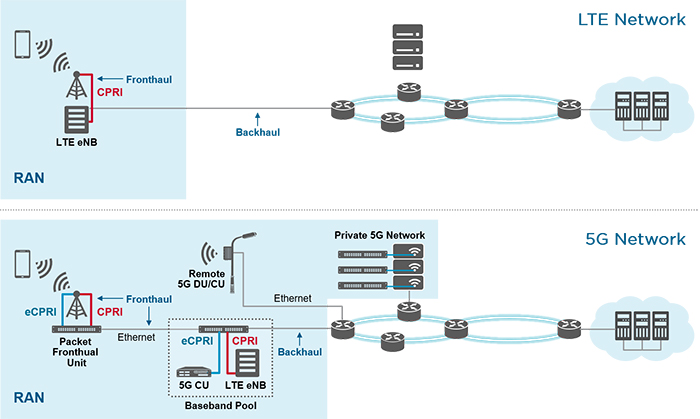
To truly appreciate the complexities of choosing between Ethernet and fiber, it's essential to grasp the fundamental role and evolving nature of 5G fronthaul. Unlike previous generations where Baseband Units (BBUs) were co-located with RUs, 5G architectures, particularly those leveraging C-RAN (Centralized RAN) and O-RAN (Open RAN), separate these components. The fronthaul then becomes the vital link transmitting raw radio signals between the RUs (often at the cell tower) and the DUs (which can be located centrally or at the edge of the network). This separation introduces significant challenges regarding bandwidth demands, latency requirements, and synchronization.
What is 5G Fronthaul?
5G fronthaul refers specifically to the part of the mobile network that connects the Radio Units (RUs) at the cell site to the Distributed Units (DUs). The DU performs real-time processing of the radio signals, while the RU is responsible for transmitting and receiving radio waves. The efficient and reliable transport of data between these two elements is crucial for delivering the promised 5G experience, especially for applications like augmented reality, virtual reality, and industrial IoT that demand extremely low end-to-end latency.
The Evolution from CPRI to eCPRI and Beyond
Historically, in 4G LTE networks, the Common Public Radio Interface (CPRI) was the standard for fronthaul. CPRI, a high-speed serial interface, was designed to transport digitized radio signals with minimal latency. However, its fixed-rate, high-bandwidth nature made it inefficient for the massive bandwidth requirements and flexible architectures of 5G. This led to the development of enhanced CPRI (eCPRI). eCPRI is an Ethernet-friendly protocol that allows for more flexible functional splits between the RU and DU, reducing the bandwidth required on the fronthaul link by performing some processing at the RU itself. This shift is a game-changer, opening the door for packet-based transport solutions like Ethernet to play a more prominent role in the fronthaul transport network.
Key Performance Indicators for Fronthaul
When evaluating fronthaul solutions, several KPIs are paramount:
- Bandwidth: 5G requires significantly higher bandwidth than previous generations, driven by massive MIMO, wider channels, and higher user densities. The fronthaul must support this massive data flow.
- Latency: Ultra-reliable low-latency communication (URLLC) is a cornerstone of 5G. The fronthaul link must introduce minimal delay, typically in the microseconds range.
- Synchronization: Precise timing and phase synchronization are critical for efficient radio resource management, especially for techniques like coordinated multipoint (CoMP) and massive MIMO.
- Jitter: Variations in latency, known as jitter, can severely degrade performance and must be tightly controlled.
- Reliability: The fronthaul link must be highly resilient to ensure continuous service availability.
Fiber Optics: The Traditional Powerhouse for 5G Fronthaul
For decades, optical fiber has been the undisputed champion of high-speed data transmission, forming the backbone of global communication networks. Its characteristics make it an obvious candidate for 5G fronthaul.
Advantages of Fiber in Fronthaul
Fiber optics offers compelling benefits that align well with 5G's demands:
- High Bandwidth Capacity: Single-mode fiber can carry terabits of data per second, providing virtually limitless bandwidth for current and future 5G requirements. This makes it inherently future-proof for increasing data rates.
- Ultra-Low Latency: Light travels through fiber at extremely high speeds, resulting in minimal propagation delay. This is crucial for meeting 5G's stringent latency requirements.
- Long Reach: Optical signals can travel over long distances without significant degradation or the need for active repeaters, simplifying deployment in geographically dispersed areas.
- Immunity to EMI: Fiber is immune to electromagnetic interference (EMI), which is a significant advantage in dense urban environments or near power lines, ensuring signal integrity.
- Enhanced Security: Tapping into fiber optic cables is significantly harder to detect than tapping copper cables, offering a higher level of physical security for sensitive telecommunications infrastructure.
Challenges and Considerations for Fiber Deployment
Despite its advantages, deploying a purely fiber-based fronthaul network presents significant hurdles:
- High Deployment Costs (CAPEX): The cost of trenching, laying new fiber, and acquiring rights-of-way can be prohibitive, especially in areas without existing fiber infrastructure. This is a major factor in overall deployment costs.
- Installation Complexity: Fiber installation requires specialized skills, equipment, and often extensive civil works, leading to longer deployment times.
- Limited Availability: While fiber is prevalent in core networks, last-mile fiber connectivity to every potential 5G cell site, particularly small cells, is not always available.
- Environmental Impact: Extensive civil works can have environmental implications and face regulatory challenges.
- Powering Remote RUs: Fiber only carries data; RUs still require separate power cabling, adding to the complexity and cost.
For network operators looking to expand their 5G footprint, the financial and logistical burden of "digging for fiber" can be a significant deterrent. However, for greenfield deployments or areas with existing dark fiber, it remains a strong contender. Learn more about fiber network deployment strategies.
Ethernet: A Disruptive Alternative for 5G Fronthaul
The rise of packet-based networking, driven by Ethernet's ubiquity and cost-effectiveness, has made it an attractive alternative for 5G fronthaul, especially with the emergence of eCPRI and the O-RAN architecture. Ethernet offers a different set of advantages and challenges compared to fiber.
Why Ethernet for Fronthaul?
Ethernet's appeal stems from several key characteristics:
- Cost-Effectiveness (OPEX & CAPEX): Ethernet equipment is generally cheaper than specialized CPRI/eCPRI optical transceivers. Leveraging existing Ethernet infrastructure, where available, can drastically reduce capital expenditure (CAPEX) and operational expenditure (OPEX).
- Flexibility and Programmability: Ethernet is a highly flexible and programmable technology, making it well-suited for the dynamic and virtualized nature of 5G networks, especially within an O-RAN framework. This allows for easier network slicing and resource allocation.
- Mature Ecosystem: Ethernet benefits from a vast, mature, and competitive ecosystem of vendors, driving innovation and reducing costs.
- Easier Integration: Its widespread adoption across IT and telecom networks simplifies integration with existing backhaul and core network elements.
- Support for IP-based Services: As 5G moves towards an all-IP architecture, Ethernet provides a native transport for IP-based services, simplifying overall network architecture.
Addressing Ethernet's Challenges: Latency and Synchronization
Traditionally, Ethernet's packet-switched nature introduced variable latency and lacked inherent precise timing capabilities, making it unsuitable for strict fronthaul requirements. However, significant advancements have mitigated these concerns:
- Time-Sensitive Networking (TSN): TSN, a set of IEEE 802.1 standards, enhances standard Ethernet to provide deterministic performance, ensuring low latency and low jitter for critical traffic. It enables traffic shaping, scheduling, and precise time synchronization over Ethernet.
- Synchronous Ethernet (SyncE) and PTP (Precision Time Protocol): These technologies provide highly accurate frequency and phase synchronization over Ethernet networks, meeting the stringent timing requirements of 5G base stations.
- eCPRI Optimization: The eCPRI protocol is specifically designed to be carried over Ethernet, enabling efficient mapping of radio traffic onto packet-switched networks while reducing bandwidth.
These innovations have transformed Ethernet from a non-starter to a viable and compelling option for 5G fronthaul, especially in scenarios like enterprise 5G or private networks where existing Ethernet infrastructure can be leveraged.
Use Cases and Scenarios for Ethernet Fronthaul
Ethernet fronthaul is particularly attractive in specific deployment scenarios:
- C-RAN and O-RAN Architectures: Its flexibility and ability to support various functional splits make it ideal for centralized and open radio access network deployments.
- Small Cell and Dense Urban Deployments: Where laying new fiber is challenging or prohibitively expensive, Ethernet over existing copper (e.g., G.fast, DOCSIS) or microwave links can provide a quick and cost-effective solution.
- Enterprise and Private 5G Networks: Businesses often have extensive existing Ethernet infrastructure, making it a natural choice for deploying private 5G networks for industrial automation or campus connectivity.
- Indoor Deployments: For in-building 5G solutions, leveraging existing Ethernet cabling can significantly reduce deployment complexity and cost.
The ability of Ethernet to adapt to various deployment models and leverage existing infrastructure is a strong point in its favor, contributing to faster time-to-market for 5G services.
5G Fronthaul Ethernet vs Fiber: A Direct Comparison
The decision between Ethernet and fiber is rarely black and white. It's a complex balancing act influenced by numerous factors. Let's directly compare them across key dimensions:
Performance Metrics: Latency, Bandwidth, and Jitter
- Latency: Fiber optics inherently offers the lowest propagation delay, making it the gold standard for ultra-low latency. While TSN and optimized eCPRI can significantly reduce Ethernet latency, fiber still holds a slight edge for the most extreme URLLC use cases.
- Bandwidth: Both can provide sufficient bandwidth for 5G. However, fiber offers virtually unlimited scalability for future bandwidth growth without requiring infrastructure upgrades. Ethernet's bandwidth is tied to specific standards (e.g., 10GbE, 25GbE, 100GbE) and may require hardware upgrades for significant jumps.
- Jitter: Fiber has minimal jitter. Ethernet, even with TSN, requires careful design and configuration to minimize jitter, though modern implementations are highly capable.
Cost Implications: CAPEX and OPEX
This is where the most significant divergence often lies:
- CAPEX (Capital Expenditure): Deploying new fiber infrastructure (trenching, cabling, rights-of-way) is typically very high. If dark fiber is available, CAPEX can be lower. Ethernet leverages cheaper, off-the-shelf equipment and can utilize existing copper infrastructure, potentially offering significant CAPEX savings.
- OPEX (Operational Expenditure): Fiber networks are generally simpler to operate once deployed, with lower power consumption per bit over long distances. Ethernet networks, especially those using TSN, might require more complex management and monitoring, but overall OPEX can be lower due to equipment cost and ease of integration.
Deployment Flexibility and Scalability
- Fiber: Less flexible in terms of deployment locations if new trenching is required. However, once laid, it offers high scalability for future bandwidth.
- Ethernet: Highly flexible, especially when leveraging existing infrastructure or in scenarios like private networks. Scalability often involves upgrading interfaces, which can be simpler than laying new fiber. Its programmability also offers greater flexibility for network slicing and dynamic resource allocation.
Power Consumption and Environmental Footprint
- Fiber: Passive fiber itself consumes no power. Active optical equipment (transceivers, DWDM systems) does consume power, but typically less per bit over long distances compared to copper-based Ethernet for equivalent performance.
- Ethernet: Copper-based Ethernet can have higher power consumption over distance due to signal attenuation. However, in short-reach scenarios or when leveraging existing infrastructure, the overall power footprint might be lower due to reduced need for new active equipment.
Security and Resilience
- Fiber: Offers inherent security benefits due to the difficulty of covert tapping. Less susceptible to external interference.
- Ethernet: Requires robust network security measures (encryption, authentication) at the protocol layer. Can be susceptible to physical tapping if copper is used, but less so with optical Ethernet. Resilience is achieved through redundancy protocols (e.g., RSTP, MPLS-TP).
Strategic Considerations for Network Operators
The optimal choice for 5G fronthaul is rarely uniform across an entire network. A strategic approach often involves a combination of technologies.
Hybrid Approaches and Coexistence
Many operators are adopting a hybrid approach, leveraging the strengths of both technologies. For instance, high-traffic macro cell sites requiring maximum performance might still benefit from dedicated fiber. Conversely, dense small cell deployments in urban cores or enterprise campuses might be better served by Ethernet over existing infrastructure or short-haul copper/microwave links. The key is to design a flexible transport network that can accommodate diverse access technologies and functional splits.
The Role of O-RAN and Virtualization
The Open Radio Access Network (O-RAN) movement is a significant driver for Ethernet adoption in fronthaul. O-RAN promotes open interfaces and virtualization, allowing operators to disaggregate hardware and software. This shift makes Ethernet's flexibility and software-defined networking (SDN) capabilities highly advantageous, enabling more dynamic resource allocation and easier integration of multi-vendor solutions. O-RAN's emphasis on eCPRI-based functional splits specifically facilitates the use of packet-based fronthaul.
Future-Proofing Your Fronthaul Network
When making a decision, consider not just current 5G demands but also future evolutions. Will the chosen technology seamlessly support 5G-Advanced and 6G? Fiber's raw bandwidth capacity offers strong future-proofing. Ethernet's flexibility and continuous evolution (e.g., higher speeds, more robust TSN profiles) also provide a path forward, particularly in its ability to integrate with edge computing and more distributed network architecture models. The ability to upgrade gracefully without a complete rip-and-replace is a crucial factor for long-term network modernization.
Actionable Tips for Choosing Your 5G Fronthaul Solution
Navigating this complex decision requires a methodical approach. Here are some actionable tips for network operators:
- Assess Existing Infrastructure: Conduct a thorough audit of your current fiber and copper assets. Leveraging existing infrastructure can significantly reduce initial deployment costs.
- Define Specific Use Cases: Match the fronthaul technology to the specific service requirements. URLLC for industrial automation might demand pure fiber, while enhanced mobile broadband (eMBB) in a suburban area could be well-served by Ethernet.
- Perform Total Cost of Ownership (TCO) Analysis: Look beyond initial CAPEX. Consider OPEX, maintenance, power consumption, and future upgrade costs over the network's lifecycle.
- Evaluate O-RAN Strategy: If embracing O-RAN, prioritize solutions that align with its open, virtualized, and Ethernet-friendly principles.
- Pilot and Test: Before a large-scale rollout, conduct pilot deployments of both fiber and Ethernet fronthaul solutions in representative environments to gather real-world performance data and identify potential challenges.
- Consider Hybrid Deployments: Don't limit yourself to one technology. A mix-and-match approach often provides the most optimized and cost-effective solution across diverse geographic and service requirements.
- Engage with Vendors and Experts: Consult with equipment vendors and independent consultants who specialize in 5G transport networks to understand the latest innovations and best practices. Contact our experts for tailored network consulting.
Frequently Asked Questions
What is the primary difference between 5G fronthaul and backhaul?
The primary difference lies in the network segments they connect and the data they carry. 5G fronthaul connects the Radio Unit (RU) at the cell site to the Distributed Unit (DU), carrying raw or lightly processed radio signals (e.g., eCPRI traffic). It has extremely strict latency and synchronization requirements. In contrast, 5G backhaul connects the DU to the Centralized Unit (CU) and then to the core network, carrying aggregated and processed IP traffic. Backhaul typically has less stringent latency demands than fronthaul but requires very high bandwidth.
Can existing Ethernet infrastructure be used for 5G fronthaul?
Yes, existing Ethernet infrastructure can often be repurposed for 5G fronthaul, especially with advancements like Time-Sensitive Networking (TSN), Synchronous Ethernet (SyncE), and Precision Time Protocol (PTP). These technologies enhance standard Ethernet to meet the stringent latency and synchronization requirements of 5G, making it a viable and often cost-effective solution for dense urban areas or private networks where fiber deployment is challenging or expensive. The shift to eCPRI also makes Ethernet a more natural fit.
What role does O-RAN play in the choice between Ethernet and fiber for fronthaul?
The O-RAN (Open Radio Access Network) architecture significantly influences the choice by promoting open interfaces and functional splits that are highly compatible with packet-based transport. O-RAN's emphasis on breaking down proprietary vendor lock-ins and enabling more flexible network deployments naturally favors Ethernet due to its inherent flexibility, programmability, and a vast, competitive ecosystem. While fiber can still be used, O-RAN's design principles, particularly the use of eCPRI, make Ethernet a more strategically aligned choice for achieving greater network agility and lower total cost of ownership.

0 Komentar