
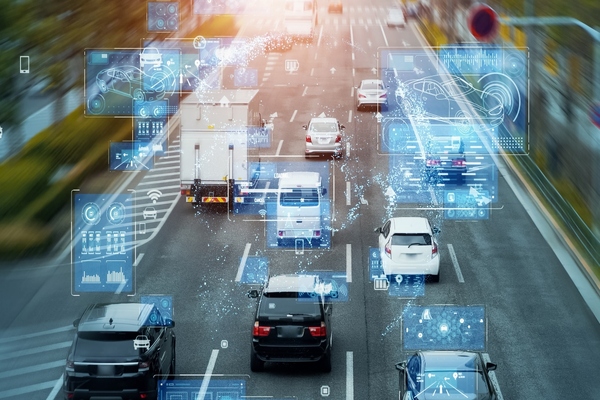
5G for Connected Cars & Intelligent Transportation: Revolutionizing Mobility
The dawn of the 5G era marks a pivotal moment for the automotive industry and urban development. Far beyond mere faster downloads, 5G for connected cars and intelligent transportation systems is poised to fundamentally redefine how we travel, manage traffic, and interact with our environments. This comprehensive guide, crafted by an SEO expert, delves into the transformative power of 5G, exploring its core capabilities, critical applications, and the profound impact it will have on creating safer, more efficient, and truly intelligent mobility solutions. Prepare to discover how next-generation wireless technology is driving the future of smart cities and autonomous driving.
The Foundation: Why 5G is a Game-Changer for Mobility
Previous generations of wireless technology, while impressive, simply couldn't meet the stringent demands of mission-critical applications like autonomous driving or real-time traffic management. 4G networks, for instance, offer decent bandwidth but lack the ultra-low latency and massive connectivity required for vehicles to communicate instantaneously with each other and their surroundings. This is precisely where 5G steps in, providing the indispensable backbone for the next wave of automotive innovation and intelligent transportation infrastructure.
Key Pillars of 5G for Automotive
5G's superiority stems from three foundational pillars, each critical for the unique requirements of the automotive and transportation sectors:
- Enhanced Mobile Broadband (eMBB): This provides significantly higher bandwidth, enabling vehicles to download and upload vast amounts of data at unprecedented speeds. Imagine high-definition mapping updates, rich in-car infotainment, and over-the-air software updates delivered seamlessly. This high throughput is vital for complex AI models in autonomous vehicles.
- Ultra-Reliable Low-Latency Communication (URLLC): Perhaps the most critical feature for safety-critical applications, URLLC ensures near-instantaneous communication with latencies as low as 1 millisecond. This is non-negotiable for collision avoidance, platooning, and remote control of vehicles, where every millisecond counts in preventing accidents and ensuring smooth operations within an intelligent transportation network.
- Massive Machine-Type Communications (mMTC): 5G can connect millions of devices per square kilometer, far exceeding 4G's capacity. This is crucial for connecting not just vehicles, but also traffic lights, road sensors, smart parking meters, and public transport systems, creating a truly interconnected smart city ecosystem.
Connected Cars: Beyond Infotainment
The concept of connected cars isn't new, but 5G elevates it from a convenience feature to a safety and efficiency imperative. Historically, connectivity in vehicles focused primarily on navigation, emergency calls, and basic infotainment. With 5G, the focus shifts dramatically towards Vehicle-to-Everything (V2X) communication, enabling vehicles to become active participants in a dynamic, responsive transportation system.
Vehicle-to-Everything (V2X) Communication Explained
V2X communication is the overarching term for information exchange between a vehicle and any entity that may affect it. While Wi-Fi-based Dedicated Short-Range Communications (DSRC) was an early contender, Cellular V2X (C-V2X) leveraging 5G technology is emerging as the preferred global standard due to its superior performance, broader reach, and integration with cellular networks. C-V2X encompasses several crucial communication types:
- Vehicle-to-Vehicle (V2V): Allows cars to directly communicate with each other, sharing critical data like speed, direction, braking events, and road hazards. This enables real-time collision warnings, cooperative lane changes, and efficient platooning (where vehicles travel closely together to reduce drag and improve fuel efficiency).
- Vehicle-to-Infrastructure (V2I): Enables communication between vehicles and roadside infrastructure such as traffic lights, road signs, and construction zones. This can optimize traffic flow by providing real-time information on signal timing, road conditions, and congestion, contributing significantly to traffic management solutions.
- Vehicle-to-Pedestrian (V2P): Facilitates communication between vehicles and vulnerable road users equipped with compatible devices (e.g., smartphones, wearables). This enhances safety by alerting drivers to nearby pedestrians or cyclists, particularly in busy urban environments.
- Vehicle-to-Network (V2N): Connects vehicles to the cellular network, cloud services, and other backend systems. This supports cloud-based services like advanced navigation, remote diagnostics, infotainment streaming, and over-the-air software updates, enriching the overall telematics experience.
Revolutionizing Intelligent Transportation Systems (ITS)
The impact of 5G extends far beyond individual vehicles, fundamentally transforming the entire ecosystem of Intelligent Transportation Systems (ITS). By providing a ubiquitous, high-speed, and low-latency network, 5G enables a truly integrated and responsive transportation infrastructure that can react dynamically to real-time conditions.
Smart City Integration and Traffic Optimization
For cities striving to become "smart," 5G is the connective tissue that brings disparate systems together. This integration allows for unprecedented levels of data collection, analysis, and actionable insights, leading to more efficient and sustainable urban mobility. Key areas of impact include:
- Dynamic Traffic Flow Management: 5G-enabled sensors embedded in roads and traffic lights can collect real-time data on vehicle density, speed, and congestion. This data, processed at the edge computing level, allows traffic signals to dynamically adjust their timing, reroute vehicles, and provide predictive traffic alerts, significantly reducing bottlenecks and travel times.
- Optimized Public Transportation: Buses and trains can communicate their exact location and passenger loads, allowing for dynamic scheduling adjustments and real-time updates for commuters. This improves reliability and encourages greater use of public transport, reducing urban congestion and carbon emissions.
- Smart Parking Solutions: Sensors can detect available parking spots, transmitting this information to drivers in real-time via their connected vehicles or smartphone apps. This reduces wasted time searching for parking and alleviates congestion in commercial areas.
- Enhanced Emergency Services: Ambulances, fire trucks, and police vehicles can communicate with traffic infrastructure to clear routes, ensuring faster response times. Real-time data from accident scenes can also be transmitted quickly to emergency responders and hospitals, improving outcomes.
Real-World Applications and Use Cases
To truly grasp the transformative potential of 5G for connected cars and intelligent transportation, it's essential to look at specific applications that are already being piloted or are on the horizon. These use cases highlight how 5G's unique characteristics translate into tangible benefits.
Enhancing Autonomous Driving Capabilities
While autonomous vehicles can operate to a degree without 5G, the technology is crucial for achieving higher levels of automation (Level 4 and Level 5) and ensuring maximum safety and reliability. 5G facilitates:
- Real-time Sensor Fusion and Data Sharing: Autonomous vehicles generate terabytes of data from their cameras, lidar, radar, and ultrasonic sensors. 5G's high bandwidth allows for the rapid processing and sharing of this data, both within the vehicle and with cloud-based AI systems or other vehicles, enabling a more comprehensive and accurate understanding of the surrounding environment. This is critical for robust sensor fusion.
- High-Definition Mapping and Localization: Real-time updates to high-definition maps, crucial for autonomous navigation, can be streamed over 5G, ensuring vehicles always have the most current information about road conditions, construction, and temporary changes.
- Remote Operation and Teleoperation: In complex or hazardous situations, a human operator can remotely control an autonomous vehicle over a 5G network, leveraging its ultra-low latency to ensure precise and safe command execution.
- Platooning and Cooperative Maneuvering: Groups of autonomous trucks or cars can travel in close formation, precisely coordinated via 5G, leading to significant fuel efficiency gains and increased road capacity.
Improving Road Safety and Efficiency
Beyond autonomous driving, 5G significantly enhances overall road safety and operational efficiency for all vehicles:
- Collision Avoidance and Hazard Warnings: V2V communication allows vehicles to alert each other to sudden braking, icy patches, or objects on the road, providing critical seconds for drivers to react. For instance, a vehicle braking hard ahead could instantly send a warning to following vehicles, even if they're around a blind corner.
- Predictive Maintenance: Vehicles can continuously monitor their own performance and wirelessly transmit diagnostic data over 5G. This enables predictive maintenance, where potential issues are identified and addressed before they lead to breakdowns, reducing roadside incidents and improving vehicle uptime. This is a significant step towards more efficient fleet management.
- Dynamic Route Optimization: Integrating real-time traffic data from across the 5G network allows navigation systems to provide highly accurate and dynamic route suggestions, helping drivers avoid congestion, construction, and accidents, thus reducing commute times and fuel consumption.
Transforming In-Car Experiences
While safety and efficiency are paramount, 5G also unlocks a new realm of possibilities for in-car entertainment and services:
- Advanced Infotainment: High-bandwidth 5G enables seamless streaming of 4K video, immersive augmented reality (AR) experiences, and cloud-based gaming for passengers, making long journeys more enjoyable.
- Context-Aware Services: As vehicles become more aware of their surroundings and occupants, 5G can facilitate personalized services, such as recommending nearby points of interest, restaurants, or charging stations based on real-time data and passenger preferences.
- Over-the-Air (OTA) Updates: Large software updates for vehicle systems, including infotainment, navigation, and even powertrain controls, can be downloaded quickly and reliably over 5G, keeping vehicles current and improving their functionality throughout their lifecycle. This is a key aspect of modern vehicle telematics.
Overcoming Challenges and Looking Ahead
While the promise of 5G for connected cars and intelligent transportation is immense, its full realization requires addressing several significant challenges related to infrastructure, security, and regulation. These are crucial considerations for any stakeholder looking to invest in or deploy 5G-enabled mobility solutions.
Infrastructure Development and Edge Computing
To deliver ultra-low latency and massive connectivity, 5G requires a far denser network of small cells than previous generations. Deploying this extensive infrastructure across vast geographical areas, especially in rural regions, is a monumental undertaking. Furthermore, to truly minimize latency, much of the data processing needs to occur closer to the source – at the network edge. Edge computing facilities will be vital, processing data from vehicles and sensors locally before sending it to the cloud, thus reducing reliance on centralized data centers and ensuring rapid response times for critical applications.
Data Security and Privacy Concerns
The sheer volume of data generated and transmitted by connected vehicles and ITS poses significant security and privacy challenges. Protecting this sensitive information from cyber threats, unauthorized access, and misuse is paramount. Robust encryption protocols, secure authentication mechanisms, and strict data governance policies will be essential to build trust and ensure the integrity of the entire system. Ensuring the privacy of individual travel patterns and personal data is also a critical ethical and legal consideration.
Regulatory Landscape and Standardization
The global deployment of 5G-enabled mobility solutions necessitates international collaboration on regulatory frameworks and technical standards. Consistent regulations for vehicle communication, data sharing, liability in autonomous driving scenarios, and spectrum allocation are crucial for interoperability and widespread adoption. Without clear, harmonized standards, fragmented systems could hinder the seamless operation of connected vehicles across different regions and manufacturers, impacting the global vision of mobility-as-a-service (MaaS).
Actionable Steps for Industry Stakeholders
For automotive OEMs, technology providers, city planners, and government agencies, embracing the 5G revolution in transportation requires strategic foresight and proactive engagement. Here are actionable tips:
- Foster Cross-Industry Collaboration: The complexity of 5G-enabled mobility demands unprecedented collaboration between telecom operators, automakers, software developers, urban planners, and government bodies. Joint ventures, pilot programs, and public-private partnerships are essential for accelerating development and deployment.
- Invest in Infrastructure and Testing: Companies and municipalities should prioritize investment in 5G network expansion, particularly in key transportation corridors and urban centers. Establishing dedicated testbeds and living labs for V2X communication and autonomous vehicle testing is also crucial for refining technologies and demonstrating their capabilities safely.
- Prioritize Cybersecurity from Design: Security cannot be an afterthought. Implement a "security by design" approach for all connected vehicle and ITS components, ensuring robust protection against evolving cyber threats from the very outset.
- Engage with Policy Makers: Actively participate in discussions with regulatory bodies and standards organizations to help shape policies that support innovation while ensuring safety, privacy, and interoperability. Advocate for clear guidelines that foster a predictable environment for investment and deployment.
- Develop Use Cases with Clear ROI: Focus on pilot projects that demonstrate tangible benefits and a clear return on investment, whether it's reduced congestion, improved safety, or new revenue streams from data-driven services. This will build momentum and secure further investment for broader deployment of smart transportation solutions.
Frequently Asked Questions
What is the primary benefit of 5G for connected cars?
The primary benefit of 5G for connected cars is its ultra-reliable low-latency communication (URLLC), which enables near-instantaneous data exchange crucial for safety-critical applications like collision avoidance and real-time decision-making for autonomous vehicles. This, combined with high bandwidth, facilitates a truly responsive and intelligent vehicle ecosystem.
How does 5G enable autonomous vehicles?
5G enables autonomous vehicles by providing the necessary high bandwidth for rapid sensor data processing and sharing, ultra-low latency for immediate vehicle-to-vehicle (V2V) and vehicle-to-infrastructure (V2I) communication, and massive connectivity for real-time high-definition mapping updates and remote teleoperation. It allows for advanced sensor fusion and cooperative driving maneuvers that are not feasible with previous network generations.
What is Vehicle-to-Everything (V2X) communication?
Vehicle-to-Everything (V2X) communication is a broad term encompassing the exchange of information between a vehicle and any entity that may affect it. This includes Vehicle-to-Vehicle (V2V), Vehicle-to-Infrastructure (V2I), Vehicle-to-Pedestrian (V2P), and Vehicle-to-Network (V2N) communications. 5G's Cellular V2X (C-V2X) variant is key to enabling real-time safety warnings, traffic optimization, and enhanced awareness for both human drivers and autonomous systems within intelligent transportation systems.
How will 5G impact urban traffic management?
5G will revolutionize urban traffic management by enabling real-time data collection from a vast network of connected sensors, vehicles, and traffic infrastructure. This allows for dynamic adjustment of traffic signals, intelligent rerouting to avoid congestion, smart parking solutions, and improved emergency vehicle response times. The result is significantly reduced traffic jams, lower emissions, and more efficient movement of people and goods within smart cities.
Is 5G secure enough for critical automotive applications?
While 5G offers inherent security enhancements over previous generations, the security of critical automotive applications still relies heavily on robust implementation of encryption, authentication, and cybersecurity protocols. The industry is actively developing advanced security measures and standards to protect against cyber threats, data breaches, and unauthorized access, ensuring the integrity and safety of 5G-enabled connected cars and intelligent transportation networks.

0 Komentar