
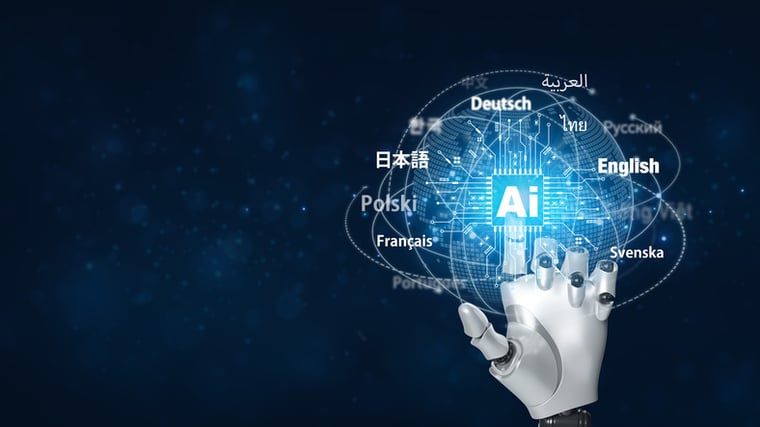
The Future of Machine Translation in 2025: Bridging Global Divides with AI
The landscape of global communication is undergoing a profound transformation, and at its heart lies the relentless evolution of machine translation (MT). As we cast our gaze towards 2025, it's clear that this technology is not just advancing; it's redefining how businesses operate, cultures connect, and individuals interact across linguistic boundaries. This article delves deep into the anticipated advancements and impact of machine translation in 2025, offering a comprehensive look at the sophisticated AI-powered solutions poised to shatter language barriers and foster unprecedented levels of cross-cultural understanding. Prepare to explore a future where seamless, instantaneous communication is not merely a dream, but a tangible reality driven by cutting-edge translation technology.
The Evolution Continues: Neural Machine Translation's Dominance
By 2025, Neural Machine Translation (NMT) will have solidified its position as the undisputed gold standard in the field. Moving far beyond the phrase-based and statistical methods of the past, NMT models, powered by deep learning algorithms, continue to demonstrate remarkable improvements in output quality. We anticipate significant strides in their ability to grasp nuanced context, produce grammatically coherent sentences, and generate translations that sound increasingly natural and human-like. The focus won't just be on word-for-word accuracy, but on capturing the true intent and tone of the source text, a critical factor for effective global communication.
Personalized and Adaptive MT Systems
A key hallmark of the future of machine translation in 2025 will be its adaptability. Expect to see highly personalized and adaptive MT systems that learn continuously from user feedback, specific industry jargon, and even individual writing styles. This means that an MT engine used by a legal firm will become increasingly proficient in legal terminology, while one used for creative marketing will develop a knack for compelling prose. These adaptive MT capabilities will be crucial for the localization industry, allowing businesses to maintain brand consistency and cultural relevance across diverse markets without sacrificing efficiency. The ability to fine-tune models with proprietary data will give enterprises a significant competitive edge in generating multilingual content that resonates deeply with target audiences.
Real-Time Communication: The Holy Grail of 2025
Perhaps the most exciting development we foresee is the near-perfection of real-time communication via machine translation. Imagine a world where language is no longer an impediment to spontaneous interaction. By 2025, we anticipate robust, low-latency solutions for simultaneous interpretation in various scenarios.
Voice-to-Voice and Text-to-Speech Integration
- Global Business Meetings: Conferences and virtual meetings will feature integrated MT that translates spoken words instantly, allowing participants from different linguistic backgrounds to engage in fluid dialogue. This will dramatically reduce the need for human interpreters in many standard business contexts, freeing them for more complex, high-stakes scenarios.
- Enhanced Customer Support: Call centers and online chat platforms will leverage advanced MT to provide immediate support to customers worldwide, significantly improving customer satisfaction and expanding service reach. This seamless translation will break down language barriers, making support truly global.
- Everyday Interactions: Personal devices and wearable tech will offer sophisticated voice-to-voice translation, enabling travelers, students, and immigrants to navigate foreign environments with unprecedented ease. This will foster greater cross-cultural understanding in daily life.
The integration of text-to-speech and speech-to-text technologies will be so advanced that conversations will flow almost as if both parties were speaking the same language, with natural intonation and cadence.
The Role of Human Expertise: A Symbiotic Relationship
Despite the rapid advancements, it's vital to address a common misconception: machine translation in 2025 will not replace human translators entirely. Instead, it will foster a powerful, symbiotic relationship. Human expertise will remain indispensable for quality assurance, nuanced interpretation, and creative adaptation.
Enhancing Translator Workflows and Efficiency
Professional translators will increasingly leverage MT as a powerful augmentation tool. Their role will evolve towards post-editing, refining machine-generated output to ensure cultural appropriateness, stylistic consistency, and absolute accuracy in critical domains. This human-in-the-loop approach will allow translators to handle significantly higher volumes of work, focus on complex projects that require deep linguistic and cultural insight, and deliver faster turnaround times. MT will become a productivity multiplier, freeing human experts from repetitive tasks and allowing them to concentrate on the high-value aspects of translation. For instance, a human translator might use an AI-powered translation tool to quickly draft an initial translation, then spend their time meticulously refining it for maximum impact and precision.
Actionable Tip for Translators: Invest in training for advanced post-editing techniques and familiarize yourself with various MT engines. Your future value lies in your ability to expertly refine AI output, not just create from scratch. Look for opportunities to specialize in niche areas where human nuance is paramount, such as marketing transcreation or legal document certification.
Industry-Specific Applications and Customization
By 2025, the specificity of machine translation will be a defining characteristic. Generic MT tools will still exist, but the real power will lie in highly specialized, domain-specific engines trained on vast datasets relevant to particular industries.
The Rise of Multimodal Machine Translation
Beyond text and voice, machine translation in 2025 will embrace multimodal inputs. This means the ability to translate text embedded within images, process speech from video, and even understand contextual cues from visual information. Imagine:
- Medical Sector: Translating complex medical reports, patient histories, and research papers with high accuracy, understanding specific terminologies and abbreviations. Data privacy and security will be paramount, leading to the development of highly secure, localized MT solutions.
- Legal Sector: Automating the translation of contracts, patents, and legal documents, while flagging potential ambiguities that require human review. The ethical considerations around legal accuracy and potential misinterpretations will drive stringent validation processes.
- Technical & Manufacturing: Providing instant translation of technical manuals, engineering specifications, and safety instructions, crucial for global supply chains and product deployment.
- Marketing & E-commerce: Localizing product descriptions, ad copy, and website content to resonate culturally, driving global sales and brand recognition. This will often involve a blend of MT for speed and human transcreation for creative impact.
This expansion into multimodal translation will significantly impact content accessibility, making information universally understandable, regardless of its original format. From translating street signs in real-time through a camera lens to understanding dialogue in a foreign film without subtitles, the possibilities are vast.
Overcoming Challenges: Data, Bias, and Nuance
While the trajectory for machine translation in 2025 is overwhelmingly positive, the journey is not without its hurdles. Developers are actively addressing limitations such as:
- Data Quality and Scarcity: The performance of NMT models is highly dependent on the quality and quantity of training data. For low-resource languages or highly specialized domains, obtaining sufficient high-quality parallel corpora remains a challenge.
- Algorithmic Bias: MT models can inadvertently perpetuate biases present in their training data, leading to gender-biased translations, cultural insensitivities, or even discriminatory outputs. Addressing these ethical considerations requires continuous monitoring, diverse datasets, and bias mitigation techniques.
- Nuance and Idiomatic Expressions: While NMT is excellent at understanding context, capturing subtle humor, sarcasm, irony, or highly idiomatic expressions can still be difficult. These require a deep understanding of cultural context that machines are still learning to replicate. The continuous pursuit of semantic accuracy and understanding of the underlying meaning is an ongoing research area.
Ongoing research and development are focused on creating more robust, fair, and nuanced MT systems. Techniques like transfer learning, zero-shot translation, and improved active learning are pushing the boundaries, especially for languages with limited digital resources.
Future Development Areas
- Emotional Intelligence in MT: Future MT systems may attempt to identify and replicate emotional tones in translation, making communication even more authentic.
- Integration with AR/VR: Seamless translation overlays in augmented and virtual reality environments will create immersive, multilingual experiences for education, tourism, and entertainment.
- Self-Correction and Explainability: MT systems might develop capabilities to identify their own potential errors or ambiguities and even explain why a particular translation choice was made, enhancing trust and facilitating post-editing.
Actionable Insights for Businesses and Individuals
Understanding the trajectory of machine translation in 2025 is not just academic; it offers practical insights for leveraging this transformative technology.
For Businesses: Global Growth Through Smart MT Adoption
- Embrace MT for Global Market Expansion: Integrate MT into your content workflows to rapidly translate websites, product documentation, marketing materials, and customer support channels. This dramatically lowers the cost and time barrier to entering new international markets.
- Invest in Customizable MT Solutions: Generic tools won't cut it for specialized needs. Partner with providers offering solutions that can be trained on your specific terminology, style guides, and brand voice. This ensures high-quality, consistent output relevant to your industry.
- Train Staff on Post-Editing: For critical or sensitive content, ensure your internal teams or external language service providers are proficient in post-editing MT output. This hybrid approach delivers speed without compromising quality. Learn more about effective localization strategies for global success.
- Prioritize Data Security: When dealing with sensitive information, choose MT providers with robust data encryption and privacy protocols, especially for cloud-based solutions.
For Individuals: Enhancing Personal and Professional Lives
- Utilize MT for Learning and Travel: Leverage MT apps for language learning, understanding foreign texts, or navigating new countries. They are invaluable tools for quick comprehension.
- Enhance Cross-Cultural Communication: Use MT for casual conversations, understanding foreign news, or connecting with international friends. While not perfect, it significantly reduces communication friction.
- Understand Limitations: Always remember that while highly advanced, MT tools are not infallible. For critical personal documents or highly nuanced conversations, human review or interpretation is still advisable. Explore our guide on optimizing language learning with AI tools.
Frequently Asked Questions About Machine Translation in 2025
Will machine translation replace human translators by 2025?
No, machine translation in 2025 is not expected to fully replace human translators. Instead, it will create a more symbiotic relationship. MT tools will handle large volumes of repetitive, less nuanced content, while human translators will focus on specialized domains, creative texts, cultural adaptation, and critical post-editing. Their role will evolve into high-value linguistic experts and quality assurance specialists, working alongside advanced AI. The human-in-the-loop approach will be the dominant model.
How accurate will machine translation be in 2025?
By 2025, the accuracy of machine translation, particularly for well-resourced languages and common domains, will be remarkably high, often approaching human parity for fluency and grammatical correctness. However, accuracy will still be context-dependent. Highly specialized texts, creative content, or those requiring deep cultural understanding may still exhibit minor errors or awkward phrasing, necessitating human review. Advances in adaptive MT will further improve domain-specific accuracy.
What are the biggest advancements expected in MT by 2025?
The biggest advancements in machine translation by 2025 are anticipated in three key areas: near-flawless real-time communication (voice-to-voice and text-to-speech), highly personalized and adaptive MT systems that learn from user data, and the widespread adoption of multimodal machine translation, allowing translation of content embedded in images, video, and audio. Improved handling of context and nuance will also be a major focus.
How can businesses best leverage machine translation by 2025?
Businesses should best leverage machine translation in 2025 by integrating custom-trained MT engines into their global content workflows. This includes automating website localization, translating customer support interactions, and streamlining internal communications. Crucially, they should combine MT with expert human post-editing for high-stakes content, ensuring brand consistency and quality while achieving significant cost and time efficiencies. Investing in a robust localization strategy that embraces AI will be key.
What ethical considerations are important for MT in 2025?
Important ethical considerations for machine translation in 2025 include addressing algorithmic bias (ensuring translations are fair and culturally sensitive), maintaining data privacy and security for sensitive information, and ensuring transparency in how MT systems are trained and deployed. Responsible AI development will focus on mitigating potential misuse and ensuring that MT serves to bridge, not widen, societal divides.

0 Komentar