
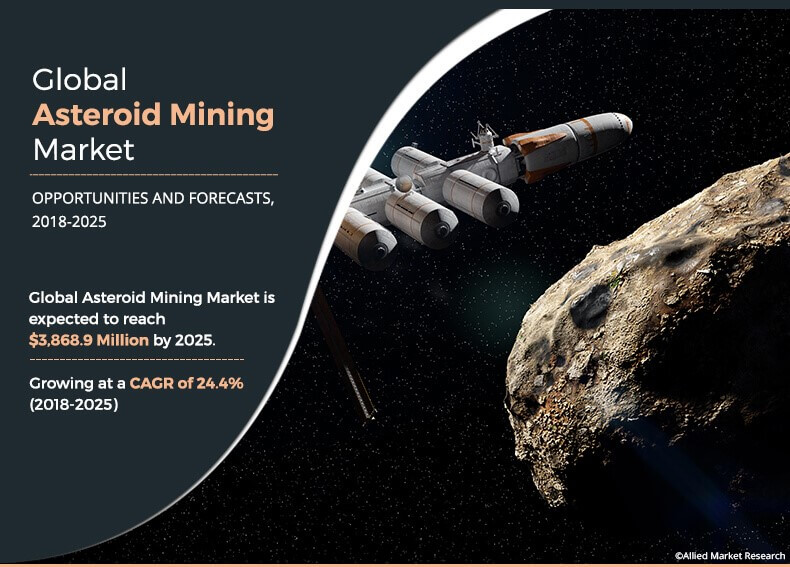
The Future of Asteroid Mining 2025: Unlocking Celestial Riches and Pioneering the Space Economy
Embark on a journey to the cosmos as we delve into the electrifying prospects of asteroid mining, a frontier that promises to redefine humanity's access to invaluable resources. By 2025, while large-scale extraction remains a vision for the distant future, the groundwork for a burgeoning space economy is being meticulously laid. This comprehensive guide, crafted by an SEO expert, will illuminate the foundational steps, technological advancements, and strategic considerations shaping the future of asteroid mining in the immediate years ahead, focusing on the critical developments expected by 2025 that will pave the way for unlocking the solar system's boundless celestial riches. We'll explore the tantalizing potential of harvesting extraterrestrial minerals and water ice, understanding the economic drivers, regulatory complexities, and the pivotal role of innovation in this groundbreaking endeavor.
The Promise of Asteroid Mining: Why it Matters for Earth and Beyond
The allure of asteroid mining stems from the immense value locked within these cosmic wanderers. Unlike finite terrestrial reserves, asteroids offer a seemingly inexhaustible supply of critical materials essential for both Earth-bound industries and the expansion of human civilization into space. The economic viability and strategic importance of these celestial bodies are becoming increasingly clear, driving significant interest from private ventures and national space agencies alike.
One of the most compelling aspects is the abundance of precious metals. Asteroids, particularly M-type (metallic) and S-type (stony-iron) asteroids, are believed to contain vast quantities of platinum group metals (PGMs) like platinum, palladium, rhodium, and iridium, alongside gold, silver, and nickel. These elements are indispensable for high-tech industries, including electronics, catalytic converters, and renewable energy technologies. As global demand for these rare elements continues to rise and their terrestrial extraction becomes more challenging and environmentally impactful, the prospect of sourcing them from space presents a revolutionary alternative.
Beyond precious metals, the most immediate and arguably most critical resource for the sustainable space exploration and development is water ice. C-type (carbonaceous) asteroids, which are abundant, are rich in volatiles, including water. This water can be processed into oxygen for breathing and, crucially, into hydrogen and oxygen propellants for rockets. The ability to refuel spacecraft in orbit or at lunar waypoints using resources extracted from asteroids (known as in-situ resource utilization or ISRU) would drastically reduce the cost and complexity of deep space missions, enabling more ambitious endeavors like Mars colonization or further exploration of the outer solar system. Imagine a future where space stations and lunar bases are self-sufficient, fueled by local resources, dramatically altering the logistics of space travel. This is the cornerstone of a true off-world manufacturing capability.
Key Resources Targeted for Asteroid Mining:
- Water Ice: Essential for life support and propellant production, reducing reliance on Earth-launched supplies. This is often seen as the "low-hanging fruit" for early asteroid mining efforts.
- Platinum Group Metals (PGMs): Highly valuable for electronics, catalysts, and specialized industrial applications. Their high market value makes them attractive targets for long-term commercial returns.
- Nickel, Iron, Cobalt: Base metals crucial for construction, manufacturing, and potential 3D printing in space, supporting the development of orbital infrastructures.
- Rare Earth Elements: Though less explored in asteroids, their presence could further diversify the resource portfolio, critical for advanced technologies.
Technological Horizons by 2025: Laying the Groundwork for Extraction
While full-scale asteroid mining operations are still decades away, the period leading up to 2025 is vital for developing and demonstrating the enabling technologies that will make it possible. This era is characterized by focused research, prototype development, and small-scale demonstrations, particularly in areas critical for rendezvous, characterization, and preliminary resource processing. The emphasis is on proving concepts and mitigating the immense technical challenges of operating in the vacuum of space, far from Earth.
Robotics and Autonomous Systems: The Vanguard of Exploration
By 2025, significant strides are expected in robotics and autonomous systems capable of operating with minimal human intervention. Given the vast distances and communication delays inherent in deep space, sophisticated AI and machine learning algorithms will be crucial for asteroid missions. These systems will handle navigation, proximity operations, surface mapping, sample collection, and even basic processing tasks. Companies are investing heavily in developing advanced manipulators, grippers, and mobile platforms designed to function in microgravity environments and harsh radiation conditions. The goal is to move from tele-operated systems to truly autonomous robotic explorers that can make on-the-spot decisions, enhancing mission efficiency and safety. Imagine a swarm of intelligent robots autonomously prospecting a distant asteroid.
Advanced Propulsion Systems: Bridging the Cosmic Distance
Efficient travel to and from asteroids is paramount. By 2025, we anticipate further maturation and deployment of advanced propulsion systems that offer significant fuel efficiency compared to traditional chemical rockets. Technologies like solar electric propulsion (SEP) and ion thrusters are becoming more reliable and powerful, enabling spacecraft to carry larger payloads and reach distant asteroids with less propellant, thereby reducing mission costs. These systems use electricity, often generated by solar panels, to accelerate propellants like xenon gas to extremely high velocities, providing continuous, low-thrust propulsion over long durations. This slow but steady acceleration is ideal for rendezvous with asteroids that may be far off-plane from Earth.
ISRU Capabilities and Pilot Projects: Practicing Off-World Resource Utilization
The concept of in-situ resource utilization (ISRU) is central to the viability of asteroid mining. By 2025, several small-scale ISRU pilot projects are expected to demonstrate key processes. The primary focus will likely be on water extraction from simulated regolith or lunar ice, and the subsequent electrolysis of water into hydrogen and oxygen. These demonstrations, often conducted on Earth or aboard the International Space Station, will validate technologies for drilling, heating, and refining materials in a vacuum. Early missions targeting the Moon or Mars could serve as crucial testbeds for technologies directly applicable to asteroid mining, proving the capability to "live off the land" beyond Earth's orbit. Read more about ISRU technologies.
Sensing and Prospecting Technologies: Identifying the Riches
Before any mining can occur, resource-rich asteroids must be accurately identified and characterized. By 2025, we expect advancements in sensing and prospecting technologies that can perform detailed surveys from orbit or during flybys. This includes high-resolution imaging, spectroscopy (to identify mineral composition), thermal mapping, and potentially small-scale impactors to analyze subsurface material. These technologies are crucial for determining an asteroid's composition, size, rotation, and orbital characteristics, allowing for precise mission planning and selection of the most promising targets. The ability to remotely assess the value of an asteroid will be a game-changer for investment and mission design.
Economic Landscape and Investment Opportunities in the Emerging Space Economy
The emerging space economy is a dynamic ecosystem attracting significant capital, and asteroid mining is positioned as a long-term, high-reward component. By 2025, the investment focus will largely be on the foundational technologies and early-stage ventures that are building the infrastructure for future resource extraction. Private companies are playing an increasingly dominant role, often backed by venture capital and strategic partnerships.
Market Drivers and Demand: Fueling the Cosmic Rush
The primary market drivers for asteroid mining are two-fold: the increasing terrestrial demand for critical minerals, and the burgeoning demand for in-space propellant and construction materials to support expanded space operations. As Earth's population grows and technology advances, the need for rare elements will only intensify. Simultaneously, as more satellites are launched, space stations are built, and missions to the Moon and Mars become more frequent, the logistics and cost of launching everything from Earth become unsustainable. Asteroid-derived resources offer a pathway to self-sufficiency in space, transforming the economics of space exploration and development.
Investment Considerations and Risks: A Frontier for Capital
Investing in asteroid mining by 2025 involves a unique set of considerations. It's a field with high upfront costs, long development cycles, and significant technological hurdles. The return on investment (ROI) is inherently long-term, often stretching decades into the future. However, the potential rewards are astronomical. Early investors are essentially betting on the future of space industrialization. Companies seeking funding are typically those developing specific technologies (robotics, propulsion, ISRU), conducting prospecting missions, or designing the legal and financial frameworks for space resource utilization. Actionable tip for investors: Diversify your portfolio to include companies focused on different aspects of the value chain – from remote sensing to processing technologies. Focus on entities with strong technical teams and clear, phased development plans. Explore more about space investment trends.
Common Investment Risks:
- Technological Immaturity: Many technologies are still in early stages of development.
- Regulatory Uncertainty: The legal framework for resource ownership is still evolving.
- High Capital Expenditure: Significant investment is required before any returns.
- Long ROI Horizon: Profitability is not expected in the near term.
- Market Volatility: Terrestrial commodity prices can fluctuate, impacting projected returns.
Navigating the Regulatory and Legal Frontier
One of the most complex aspects of asteroid mining is the absence of a fully developed international legal framework governing resource extraction in space. The foundational document, the Outer Space Treaty of 1967, declares space to be the "province of all mankind" and prohibits national appropriation of celestial bodies. However, it doesn't explicitly address the ownership of resources extracted from them.
By 2025, discussions around space law and international agreements are expected to intensify. Several nations, including the United States and Luxembourg, have enacted domestic laws that grant their citizens and companies the right to extract and own space resources. While these laws provide a legal basis for national entities, they don't resolve the broader international question of resource ownership and property rights in space. This ambiguity creates a degree of uncertainty for large-scale investment and operations.
The need for international collaboration and a robust governance framework is paramount. A global consensus on resource rights, environmental protection (though asteroids are largely inert), and benefit sharing will be crucial to avoid future conflicts and ensure equitable access to the benefits of space resources. Actionable tip for companies: Actively engage with policymakers, legal experts, and international bodies to help shape the evolving regulatory landscape. Adherence to emerging norms and best practices will be key for long-term viability and public acceptance. Ethical considerations surrounding space resource utilization are also a growing area of discussion.
Challenges and Hurdles on the Path to 2025 and Beyond
The journey to commercial asteroid mining is fraught with significant challenges, both technical and non-technical. While 2025 marks a period of foundational development, these hurdles must be systematically addressed to realize the long-term vision.
Overcoming Technical Limitations: Engineering the Future
Operating in the deep space environment presents immense technical complexities. The vast distance to asteroids means long communication delays, necessitating highly autonomous systems. The microgravity environment complicates traditional mining techniques designed for Earth's gravity. Furthermore, the harsh environment of space, characterized by extreme temperatures, radiation, and micrometeoroids, demands exceptionally robust and reliable hardware. Developing systems that can perform complex tasks like drilling, excavation, processing, and transportation in such conditions requires groundbreaking engineering. Solutions will likely involve modular designs, in-space assembly, and advanced materials science to ensure longevity and resilience.
Mitigating Financial Risks: Securing the Capital
The financial commitment required for asteroid mining is staggering. Early missions are primarily research and development efforts, not immediate profit centers. Mitigating financial risks involves a strategy of phased development, starting with smaller, less costly missions to prove technologies before scaling up. Public-private partnerships are also crucial, leveraging government funding and expertise alongside private innovation and capital. Actionable tip: Companies should focus on securing early-stage funding for high-impact, achievable demonstrations that de-risk future, larger investments. Clear milestones and transparent reporting are essential to maintain investor confidence.
Additionally, public perception and understanding of asteroid mining will play a role. While less direct than terrestrial mining, concerns about the "industrialization" of space or potential environmental impacts (e.g., space debris) will need to be addressed through transparent communication and responsible operational practices.
The Road Ahead: Milestones Beyond 2025
While 2025 represents a pivotal period for foundational development, the true impact of asteroid mining will unfold in the decades that follow. The technologies and frameworks established by then will pave the way for increasingly complex missions and, eventually, commercial operations. The path ahead involves scaling up capabilities, refining extraction processes, and establishing reliable supply chains in space.
Beyond 2025, we anticipate initial pilot returns of high-value resources to Earth, or more likely, the establishment of in-space fuel depots and manufacturing hubs. These steps will profoundly impact global economies by potentially diversifying the supply of critical materials and fostering new industries. More importantly, access to abundant space resources is a prerequisite for sustained human expansion into space, making concepts like space colonization and off-world habitation increasingly feasible. The long-term vision is not just about bringing resources back to Earth, but about building a truly interplanetary civilization, fueled and sustained by the riches of the solar system.
The journey to fully realize the potential of asteroid mining is long and challenging, but the progress made by 2025 will be critical in determining its trajectory. This is a frontier that demands innovation, collaboration, and a bold vision for humanity's future beyond Earth. We encourage anyone passionate about space and technology to engage with this burgeoning industry, whether through investment, research, or advocacy. The cosmos awaits its miners.
Frequently Asked Questions
What is the primary focus of asteroid mining efforts by 2025?
By 2025, the primary focus of asteroid mining efforts is on foundational technology development and demonstration. This includes advancing robotics for autonomous operation in space, improving efficient propulsion systems, conducting small-scale in-situ resource utilization (ISRU) pilot projects (especially for water ice extraction from simulated materials), and enhancing remote sensing and prospecting capabilities to accurately identify and characterize resource-rich asteroids. While no large-scale mining operations are expected, these critical steps will lay the necessary groundwork for future commercial viability.
Which types of asteroids are most targeted for mining?
The asteroids most targeted for mining are primarily Near-Earth Asteroids (NEAs) due to their relative accessibility. Within the NEA population, specific types are of particular interest: C-type (carbonaceous) asteroids are highly targeted for their abundance of water ice and other volatiles, crucial for propellant and life support. S-type (stony) asteroids are sought for their nickel-iron content and potential for precious metals. Less common but highly valuable are M-type (metallic) asteroids, which are essentially solid nickel-iron cores of shattered protoplanets, rich in platinum group metals and other valuable elements.
Is asteroid mining economically viable in the near future?
In the near future (e.g., by 2025), asteroid mining is generally not yet economically viable for large-scale commercial returns. The current costs associated with launching, operating, and returning materials from deep space are prohibitively high. However, the economic viability is expected to emerge in the long term, driven by two main factors: the increasing value of rare materials on Earth and, more significantly, the reduced cost of space operations by providing in-space propellant and construction materials. By 2025, the focus is on de-risking the technologies and proving the concepts that will eventually lead to economic viability, rather than generating immediate profits.
What are the biggest legal hurdles for asteroid mining companies?
The biggest legal hurdles for asteroid mining companies revolve around the ambiguity of international space law regarding resource ownership. While some national laws (like the US Space Act) permit their citizens to extract and own space resources, there is no universally accepted international treaty that clarifies property rights in space. The Outer Space Treaty of 1967 prohibits national appropriation but doesn't explicitly address the ownership of extracted resources. This lack of a clear, globally recognized framework creates uncertainty for large-scale investments and could potentially lead to disputes over claims and operations. Establishing an international consensus on a governance framework is a critical challenge.
How can individuals or companies get involved in the asteroid mining industry?
Individuals and companies can get involved in the asteroid mining industry through several avenues. For individuals, this could mean pursuing careers in aerospace engineering, robotics, materials science, or space law. For companies, opportunities exist in developing and providing enabling technologies such such as advanced propulsion systems, autonomous robotics, remote sensing instruments, and ISRU hardware. Investment is also a key pathway, supporting startups and established companies in the burgeoning space economy. Additionally, engaging in policy advocacy and contributing to the dialogue around space law and international cooperation can help shape the future of this frontier.

0 Komentar