
Revolutionizing Oil & Gas: IoT Applications in Predictive Maintenance for Enhanced Efficiency and Safety
The oil and gas industry, a cornerstone of global energy, faces immense pressure to optimize operations, reduce costs, and enhance safety in increasingly challenging environments. In this context, the integration of IoT applications in predictive maintenance oil and gas operations represents a profound digital transformation, offering unprecedented levels of insight into asset health and performance. This comprehensive guide will delve into how the Internet of Things (IoT) is fundamentally reshaping maintenance strategies, moving from reactive fixes to proactive interventions, thereby ensuring greater operational efficiency and significantly mitigating risks across the sector.
The Imperative for Predictive Maintenance in Oil & Gas
Traditionally, maintenance in the oil and gas sector has been largely reactive or time-based. Reactive maintenance, fixing equipment only after it fails, leads to costly unplanned downtime, potential safety hazards, and significant production losses. Time-based maintenance, while more structured, often results in unnecessary interventions, replacing parts before their useful life is exhausted, or missing critical issues that develop between scheduled checks. Given the harsh, remote, and often hazardous conditions in which oil and gas assets operate – from offshore platforms and remote pipelines to vast refinery complexes – these traditional approaches are no longer sustainable.
The high capital expenditure on equipment, the environmental sensitivities, and the critical importance of uninterrupted energy supply demand a more intelligent approach. Predictive maintenance, powered by IoT, addresses these challenges head-on. By continuously monitoring the condition of equipment, it allows operators to anticipate failures before they occur, enabling timely, targeted interventions. This shift is not just about cost savings; it's about safeguarding personnel, protecting the environment, and ensuring the long-term viability of critical infrastructure. It’s a strategic move towards achieving superior asset integrity and maximizing operational uptime.
How IoT Powers Predictive Maintenance in O&G
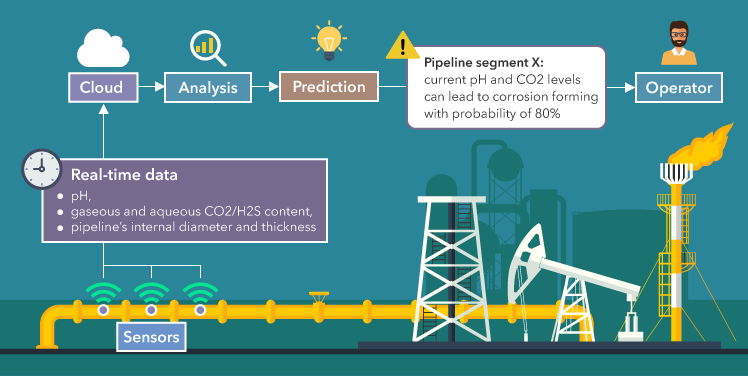
The synergy between IoT and predictive maintenance is the engine driving this revolution. IoT provides the eyes and ears, collecting vast amounts of data, while advanced analytics and machine learning interpret this data to provide actionable insights. The process typically involves several interconnected layers:
Sensor Technology and Data Acquisition
- Deployment of Smart Sensors: Thousands of sensors are deployed on critical equipment across drilling rigs, pipelines, refineries, and offshore platforms. These sensors are designed to withstand extreme temperatures, pressures, and corrosive environments. They monitor a wide array of parameters including vibration, temperature, pressure, acoustic emissions, flow rates, chemical composition, and electrical currents.
- Real-time Monitoring: These devices continuously collect data in real-time monitoring, providing an immediate snapshot of equipment health. This constant stream of information is crucial for detecting subtle changes that might precede a major failure.
- Edge Computing: To manage the immense volume of data generated, edge computing is often employed. This involves processing data closer to the source (at the "edge" of the network) before transmitting it to the cloud. This reduces latency, conserves bandwidth, and allows for immediate anomaly detection, even in remote locations.
Data Transmission and Connectivity
Once collected, data needs to be securely and reliably transmitted. This is particularly challenging in the oil and gas sector due to vast distances and remote locations. IoT leverages a variety of communication technologies:
- Wireless Networks: Technologies like Wi-Fi, LoRaWAN, and Zigbee are used for local connectivity within a facility.
- Cellular (4G/5G): For broader area coverage, especially for remote assets like pipelines or wellheads, cellular networks provide robust data transmission.
- Satellite Communication: For extremely remote or offshore assets where terrestrial networks are unavailable, satellite connectivity is vital for relaying data to central monitoring stations.
- Robust Protocols: Ensuring data integrity and security during transmission is paramount, often employing encrypted protocols to protect sensitive operational data. This ensures remote operations are conducted with full visibility.
Data Analytics and Machine Learning
This is where raw data transforms into intelligence. The collected data, often referred to as "big data," is fed into sophisticated analytical platforms:
- Big Data Processing: Cloud-based platforms or on-premise data centers are equipped to store and process petabytes of sensor data.
- AI and Machine Learning Algorithms: Advanced data analytics techniques, including machine learning (ML) and artificial intelligence (AI), are applied to identify patterns, correlations, and deviations from normal operating conditions. ML models can be trained on historical data to recognize signatures of impending failures, predict remaining useful life (RUL), and perform anomaly detection with high accuracy.
- Predictive Modeling: These models learn from past equipment failures and maintenance records to forecast when and where a failure is most likely to occur.
Actionable Insights and Decision Making
The ultimate goal is to translate data insights into proactive maintenance actions:
- Intuitive Dashboards and Alerts: Operators and maintenance teams access user-friendly dashboards that visualize equipment health, highlight anomalies, and provide predictive insights. Automated alerts are triggered when critical thresholds are crossed or potential failures are predicted.
- Integration with CMMS/EAM: IoT platforms integrate seamlessly with existing Computerized Maintenance Management Systems (CMMS) or Enterprise Asset Management (EAM) software. This allows for automated work order generation, streamlining the maintenance workflow and ensuring timely intervention.
- Proactive Intervention: Armed with predictive insights, maintenance teams can schedule repairs, order parts, and deploy personnel precisely when needed, minimizing disruption and maximizing asset availability. This proactive approach significantly contributes to asset performance management.
Key IoT Applications in O&G Predictive Maintenance
The versatility of IoT allows its application across virtually all segments of the oil and gas value chain:
Rotating Equipment Monitoring
Pumps, compressors, turbines, and motors are the workhorses of oil and gas operations. IoT sensors monitor their vibration signatures, temperature, and lubrication levels. Anomalies in these parameters can indicate bearing wear, misalignment, imbalance, or cavitation, allowing for repairs before catastrophic failure. This is critical for preventing costly shutdowns at processing plants or pumping stations along pipelines.
Pipeline Integrity Management
Maintaining the integrity of thousands of miles of pipelines is a monumental task. IoT devices, including smart pressure sensors, acoustic leak detectors, and corrosion monitors, can be deployed along pipelines to detect leaks, monitor for metal loss, and identify stress points in real-time. This not only prevents environmental disasters but also ensures continuous flow and reduces repair costs significantly.
Wellhead and Downhole Monitoring
IoT sensors can be deployed at wellheads and even downhole to monitor pressure, temperature, flow rates, and fluid composition. This data provides insights into reservoir performance, potential blockages, or equipment degradation within the well, enabling operators to optimize production and prevent well failures. The ability to monitor these remote assets contributes to better operational intelligence.
Offshore Platform and FPSO Monitoring
Offshore environments are inherently challenging. IoT applications extend to monitoring structural integrity of platforms, subsea equipment like Blowout Preventers (BOPs), risers, and mooring lines. Sensors can detect fatigue, corrosion, and stress, providing early warnings for potential structural or equipment failures, which is vital for the safety of personnel and environmental protection.
Electrical Systems and Grid Reliability
IoT also plays a role in monitoring the electrical infrastructure that powers oil and gas facilities. Smart sensors on transformers, switchgear, and generators can detect overheating, voltage fluctuations, and other electrical anomalies, preventing power outages that could halt production and damage sensitive equipment.
Benefits of Adopting IoT Predictive Maintenance
The advantages of implementing IoT-driven predictive maintenance are multi-faceted and impactful:
- Significant Reduction in Unplanned Downtime: By predicting failures, companies can reduce unplanned downtime by 20-50%, ensuring continuous production and avoiding massive revenue losses.
- Optimized Maintenance Costs: Maintenance costs can be reduced by 10-40% by shifting from time-based or reactive maintenance to condition-based maintenance, eliminating unnecessary repairs and prioritizing critical interventions.
- Enhanced Safety for Personnel: Proactive maintenance reduces the need for emergency repairs in hazardous conditions, minimizing human exposure to risks and leading to a safer working environment. This directly contributes to stronger safety protocols.
- Improved Asset Lifespan and Performance: Regular, targeted maintenance based on actual equipment condition extends the operational life of expensive assets, maximizing their return on investment.
- Greater Environmental Compliance: Early detection of leaks or equipment malfunctions prevents spills and emissions, contributing to better environmental stewardship and compliance with stringent regulations.
- Data-Driven Decision Making: Access to real-time data and predictive analytics empowers management with actionable insights, leading to more informed and strategic operational decisions.
- Increased Production Efficiency: Reliable equipment performance directly translates to consistent production levels and overall higher throughput.
Challenges and Considerations for Implementation
While the benefits are compelling, deploying IoT predictive maintenance in oil and gas is not without its hurdles:
Data Volume and Velocity
The sheer volume and rapid influx of sensor data can overwhelm traditional IT infrastructures. Companies must invest in robust data storage, processing, and analytical capabilities, often leveraging cloud computing and edge analytics solutions.
Cybersecurity Concerns
Connecting operational technology (OT) systems to IT networks for data transmission introduces significant cybersecurity risks. Protecting sensitive operational data from breaches and ensuring the integrity of control systems is paramount. Robust security architectures, encryption, and continuous monitoring are essential.
Integration with Legacy Systems
Many oil and gas facilities operate with legacy equipment and control systems that were not designed for IoT connectivity. Integrating new IoT solutions with these older systems can be complex, requiring custom interfaces and careful planning to ensure interoperability without disrupting existing operations.
Skill Gap
The successful implementation and management of IoT predictive maintenance require specialized skills in data science, machine learning, industrial IoT platforms, and cybersecurity. There is a growing need for professionals who can bridge the gap between operational technology and information technology.
Return on Investment (ROI) Justification
While the long-term benefits are clear, quantifying the immediate ROI for initial investments in IoT infrastructure and software can be challenging. Clear metrics and pilot projects are crucial for demonstrating tangible benefits and securing further investment.
Best Practices for a Successful IoT Predictive Maintenance Rollout
To navigate these challenges and maximize the benefits, consider these actionable tips:
- Start Small with Pilot Projects: Identify a critical asset or a specific operational area with a clear problem statement. Implement a pilot IoT predictive maintenance solution, gather data, and demonstrate tangible ROI before scaling up.
- Define Clear KPIs: Establish specific Key Performance Indicators (KPIs) to measure success, such as reduction in unplanned downtime, decrease in maintenance costs, or increase in asset availability.
- Invest in Robust Data Infrastructure: Ensure your data storage, processing, and analytics capabilities can handle the volume and velocity of IoT data. Consider cloud-native solutions for scalability and flexibility.
- Prioritize Cybersecurity from Day One: Integrate cybersecurity measures into every layer of your IoT architecture. Conduct regular vulnerability assessments and employee training. Learn more about secure IoT deployments by exploring resources on industrial cybersecurity.
- Foster Cross-Functional Collaboration: Break down silos between IT, operations, and maintenance teams. Successful IoT implementation requires close cooperation and shared understanding of goals.
- Choose Scalable and Interoperable Solutions: Select IoT platforms and sensors that can easily integrate with existing systems and scale as your needs grow. Open standards and APIs are key.
- Continuous Training and Skill Development: Invest in training your workforce on new technologies and analytical tools. Consider partnering with external experts to bridge immediate skill gaps.
The Future of Predictive Maintenance in Oil & Gas
The journey towards fully autonomous and intelligent oil and gas operations is well underway. The future of predictive maintenance will see even deeper integration of technologies:
- Digital Twins: Creation of virtual replicas of physical assets, updated in real-time with IoT data, enabling simulations, scenario planning, and precise predictions. Learn more about the power of digital twin technology in enhancing operational insights.
- AI-Driven Autonomous Operations: As AI capabilities mature, we can expect more autonomous decision-making in maintenance scheduling and even self-correcting systems.
- Advanced Robotics and Drones: Integration of IoT-enabled robots and drones for inspections in hazardous or inaccessible areas, collecting data directly for predictive analytics.
- Enhanced Human-Machine Collaboration: AI will augment human decision-making, providing unparalleled insights while keeping humans in the loop for complex strategic choices.
The adoption of IoT applications in predictive maintenance oil and gas is not merely a technological upgrade; it's a strategic imperative that promises to redefine efficiency, safety, and sustainability in one of the world's most critical industries.
Frequently Asked Questions
What is IoT predictive maintenance in O&G?
IoT predictive maintenance in Oil & Gas refers to the use of Internet of Things (IoT) sensors and connectivity to collect real-time data from operational equipment (like pumps, pipelines, or turbines). This data is then analyzed using advanced analytics and machine learning algorithms to predict potential equipment failures before they occur. The goal is to shift from reactive or time-based maintenance to proactive, condition-based interventions, optimizing maintenance schedules, reducing downtime, and enhancing safety across the demanding environments of the oil and gas sector.
How does IoT improve safety in O&G maintenance?
IoT significantly enhances safety in oil and gas maintenance by enabling proactive identification of equipment issues, thereby preventing catastrophic failures, leaks, or explosions. By providing real-time monitoring and predictive alerts, it reduces the need for personnel to conduct manual inspections in hazardous areas and minimizes the frequency of emergency repairs, which are inherently more dangerous. For instance, detecting a minor vibration anomaly in a pump through IoT can prevent a major mechanical failure that could injure workers or cause an environmental incident, directly improving safety protocols.
What are the main challenges when implementing IoT for predictive maintenance?
Key challenges in implementing IoT for predictive maintenance in oil and gas include managing the immense volume and velocity of sensor data, ensuring robust cybersecurity to protect critical infrastructure from attacks, integrating new IoT solutions with existing legacy systems, and addressing the skill gap in data science and industrial IoT expertise. Additionally, justifying the initial investment and demonstrating clear Return on Investment (ROI) can be a hurdle for organizations.
What kind of ROI can be expected from IoT predictive maintenance in O&G?
Organizations adopting IoT predictive maintenance in oil and gas can expect significant ROI through various benefits. These include a substantial reduction in unplanned downtime (often 20-50%), leading to millions in avoided production losses. Maintenance costs can decrease by 10-40% due to optimized scheduling and reduced emergency repairs. Furthermore, extended asset lifespan, improved safety records, and enhanced environmental compliance contribute to long-term financial and reputational gains, demonstrating compelling cost savings and operational improvements.
How does machine learning fit into IoT predictive maintenance?
Machine learning (ML) is central to IoT predictive maintenance as it provides the intelligence to interpret the vast amounts of sensor data collected. ML algorithms are trained on historical data, including past equipment failures and operational parameters, to learn patterns and correlations. They can then perform anomaly detection, identifying deviations from normal operating conditions that indicate impending failures. Furthermore, ML models can predict the remaining useful life (RUL) of equipment, allowing maintenance teams to schedule interventions precisely when needed, optimizing asset performance and preventing unexpected breakdowns.

0 Komentar