
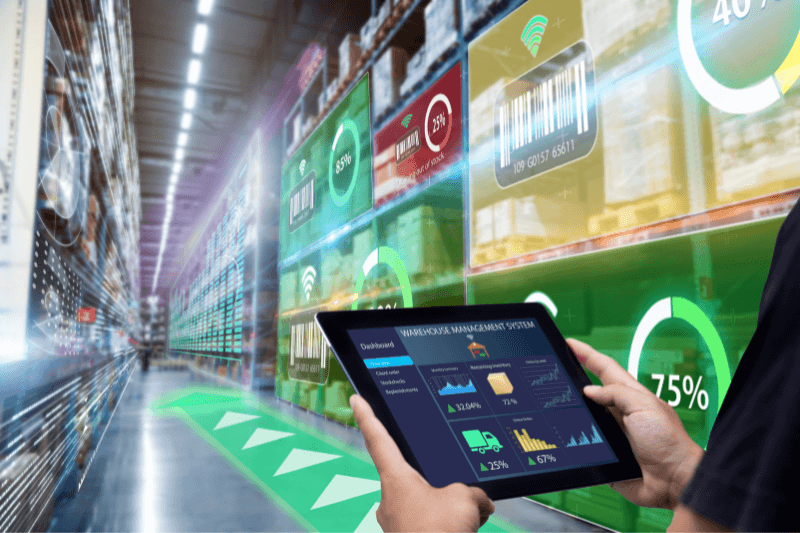
Revolutionizing Logistics: Augmented Reality in Warehouse Management Systems
The landscape of modern logistics is undergoing a profound transformation, driven by innovative technologies that promise unprecedented levels of efficiency, accuracy, and productivity. At the forefront of this revolution is augmented reality (AR) in warehouse management systems (WMS), a game-changer poised to redefine how goods are handled, tracked, and moved within the complex ecosystem of a warehouse. Imagine a world where human error is minimized, picking speeds are dramatically increased, and real-time inventory management becomes an intuitive, visual experience. This is the promise of AR, seamlessly integrating digital information with the physical world, offering a compelling solution for businesses aiming to optimize their supply chain operations and achieve superior performance.
The Paradigm Shift: Why Augmented Reality is Critical for Modern Warehousing
Traditional warehouse operations, while foundational, often grapple with inefficiencies stemming from manual processes, human error, and a lack of real-time visibility. This is where augmented reality technology steps in, offering a powerful layer of digital intelligence over physical environments. By overlaying crucial information directly into a worker's field of vision, AR dramatically reduces the cognitive load, enhances decision-making, and accelerates task completion. It’s not just about showing data; it’s about presenting actionable insights precisely when and where they are needed, transforming workers into highly efficient, digitally-enhanced operators.
The integration of AR with existing warehouse management systems creates a synergistic effect. WMS provides the structured data and operational logic, while AR provides the intuitive interface and immediate context. This combination leads to a more agile, responsive, and error-resistant warehousing environment. Businesses are increasingly recognizing that to maintain a competitive edge, embracing such advanced technologies is no longer optional but a strategic imperative for supply chain optimization.
Key Benefits of Integrating AR into Warehouse Operations
- Enhanced Picking Accuracy: One of the most significant advantages, pick-by-vision technology guides workers directly to the correct item location, displaying quantities and specific product details. This minimizes picking errors, which are costly in terms of returns, re-shipping, and customer dissatisfaction.
- Increased Operational Efficiency: By reducing the need for handheld scanners or paper lists, workers can operate hands-free. This streamlines workflows, reduces travel time, and significantly boosts overall workforce productivity. Tasks that once required multiple steps can now be completed with greater fluidity.
- Faster Onboarding and Training: AR can project visual instructions for complex tasks, making the training process for new employees much faster and more effective. This immersive training reduces reliance on experienced staff for supervision and speeds up the time to proficiency, addressing critical labor shortages.
- Improved Inventory Accuracy: Real-time data visualization through AR allows for immediate updates on stock levels and locations, leading to more precise real-time inventory management. This accuracy supports better forecasting, reduces stockouts, and optimizes storage space utilization.
- Reduced Manual Errors: Human error is a major contributor to inefficiencies and costs in warehousing. AR provides immediate visual validation, flagging discrepancies before they become problems, thereby enhancing the quality of operations.
- Enhanced Worker Safety: AR can highlight potential hazards, provide navigation through busy aisles, and offer visual cues for safe handling procedures, contributing to a safer working environment.
Augmented Reality Applications in Warehouse Management Systems
The versatility of AR allows for its application across various critical functions within a warehouse. From the moment goods arrive to their final dispatch, AR can provide tangible improvements.
1. Vision-Guided Picking and Putaway
This is perhaps the most prominent application. Workers equipped with AR smart glasses receive visual cues, arrows, and product information overlaid onto their view of the shelves. For picking, the glasses highlight the exact bin, display the item image, and show the quantity required. For putaway, they guide workers to the optimal storage location, ensuring efficient space utilization. This hands-free operation drastically cuts down on mispicks and accelerates the entire fulfillment process, making it a cornerstone of modern warehouse automation solutions.
2. Real-time Inventory Audits and Cycle Counting
Performing inventory counts is a time-consuming and often disruptive task. With AR, workers can quickly scan items using the smart glasses, with the system instantly updating inventory records and flagging discrepancies. This enables continuous, less intrusive cycle counting, providing a more accurate and up-to-date picture of stock levels without interrupting daily operations. This contributes directly to superior inventory accuracy.
3. Receiving and Quality Control
Upon arrival, AR can guide receiving personnel through the unloading process, verify incoming shipments against purchase orders, and even assist with quality checks by highlighting specific inspection points or potential damage. The ability to instantly log details and verify against digital records streamlines the receiving dock, reducing bottlenecks and improving data integrity.
4. Equipment Maintenance and Repair
AR can provide maintenance technicians with interactive overlays of machinery, showing schematics, repair instructions, and even identifying parts that need attention. This is particularly useful for complex equipment, enabling faster diagnostics and more efficient repairs, leading to less downtime and improved predictive maintenance capabilities. Imagine a technician seeing a digital overlay of an engine, highlighting the faulty component and providing step-by-step repair instructions – this is the power of AR in action.
5. Route Optimization and Navigation
For large, complex warehouses, AR can provide dynamic navigation assistance, guiding forklift operators or pickers along the most efficient routes to their next task. This real-time routing considers current congestion and order priorities, further boosting operational efficiency improvements.
Implementing Augmented Reality in Your Warehouse: Practical Considerations
While the benefits are clear, successful implementation of AR solutions for warehouses requires careful planning and consideration of several factors.
Technological Components and Infrastructure
- AR Hardware: This primarily includes industrial-grade AR smart glasses (e.g., Microsoft HoloLens, Vuzix, RealWear) designed for durability, battery life, and connectivity in demanding environments.
- Software Platform: A robust software layer is needed to integrate with the existing WMS, translate data into AR overlays, and manage user interactions. This often involves specialized AR development platforms or off-the-shelf solutions tailored for logistics.
- Connectivity: Reliable Wi-Fi or 5G infrastructure is crucial for seamless data transfer between AR devices and the WMS.
- Data Integration: The AR system must integrate flawlessly with your existing WMS, ERP, and other supply chain systems to ensure data consistency and real-time updates. This is where the concept of a digital twin technology can play a role, creating a virtual replica of the physical warehouse for enhanced data visualization and simulation.
Overcoming Implementation Challenges
- Cost of Initial Investment: While ROI is significant, the upfront cost of hardware and software can be substantial. A thorough cost-benefit analysis is essential.
- Workforce Adoption: Change management is key. Employees need proper training and a clear understanding of how AR will benefit them, not just replace them. Phased rollouts and champion programs can aid adoption.
- Data Security and Privacy: Ensuring the security of sensitive operational data transmitted through AR devices is paramount.
- Integration Complexity: Integrating new AR systems with legacy WMS or ERP systems can be complex and requires expert IT planning.
- Environmental Factors: Lighting conditions, glare, and dust can affect AR device performance. Choosing ruggedized hardware and optimizing the warehouse environment are important.
The Future of Warehouse Logistics with Augmented Reality
The trajectory of augmented reality in warehouse management systems points towards increasingly sophisticated and interconnected operations. We can anticipate deeper integration with Artificial Intelligence (AI) and Machine Learning (ML) for predictive analytics, further optimizing routes, predicting equipment failures, and even dynamically adjusting picking strategies based on real-time demand. The concept of the "connected worker" will become even more pronounced, with AR glasses serving as a central hub for all operational data and communication.
Furthermore, AR will likely play a larger role in simulating warehouse layouts, testing new processes, and even assisting with automated guided vehicles (AGVs) or robots by providing visual cues for human-robot collaboration. The fusion of AR with other emerging technologies like IoT (Internet of Things) will create truly smart, self-optimizing warehouses, solidifying AR's position as a cornerstone of future logistics innovation.
Frequently Asked Questions
How does augmented reality enhance warehouse operations?
Augmented reality significantly enhances warehouse operations by overlaying digital information onto the real-world view of workers, providing real-time, context-aware guidance. This leads to substantial improvements in picking accuracy through pick-by-vision technology, boosts operational efficiency by enabling hands-free work, and accelerates new employee onboarding through immersive visual training. It minimizes human error, optimizes inventory management, and streamlines various tasks from receiving to dispatch, making the entire process more intuitive and efficient.
What are the main benefits of using AR in warehouse management systems?
The main benefits of integrating AR into warehouse management systems include a dramatic increase in picking accuracy, substantial gains in operational efficiency and workforce productivity, improved inventory precision due to real-time updates, and faster, more effective training for new hires. Additionally, it leads to reduced manual errors, enhanced safety, and better utilization of warehouse space, all contributing to overall supply chain optimization and a stronger competitive position.
What specific AR technologies are used in warehouses?
In warehouses, the primary AR technology used involves AR smart glasses (such as those from Microsoft, Vuzix, or RealWear) which are ruggedized for industrial environments. These devices are paired with specialized software platforms that integrate with the existing WMS to translate data into visual overlays. This setup enables functionalities like guided picking, inventory scanning, and interactive training modules, all supported by robust wireless connectivity like Wi-Fi or 5G for real-time data exchange.

0 Komentar