
The Future of AI-Powered Accessibility Tools for the Disabled 2025: A Transformative Outlook
The landscape of accessibility is on the cusp of a profound revolution, driven by the relentless innovation in Artificial Intelligence. By 2025, AI-powered accessibility tools are poised to transcend traditional assistive technologies, offering unprecedented levels of independence, inclusion, and empowerment for individuals with disabilities. This comprehensive guide delves into the groundbreaking advancements, practical applications, and the ethical considerations shaping the next generation of intelligent assistive solutions. Prepare to explore how AI is not just adapting the world to people with disabilities, but fundamentally reimagining what's possible, fostering truly inclusive environments across all facets of life.
The Dawn of Hyper-Personalized Accessibility
The most significant shift we anticipate by 2025 is the move from generic assistive devices to hyper-personalized AI solutions. Leveraging advanced machine learning algorithms and predictive analytics, these tools will learn an individual's unique patterns, preferences, and challenges, adapting in real-time to provide bespoke support. This adaptive capability is crucial for addressing the diverse needs within the disability community, ensuring that technology truly serves the individual rather than imposing a one-size-fits-all approach.
Cognitive Augmentation and Neurodiversity Support
- Dynamic Learning Companions: For individuals with cognitive disabilities or those on the neurodiversity spectrum, AI will offer personalized learning environments. Imagine AI tutors that adapt teaching styles based on a student's processing speed, attention span, and preferred sensory input, providing real-time feedback and breaking down complex information into manageable chunks.
- Executive Functioning Aids: AI-powered personal assistants will move beyond simple reminders. By 2025, they will proactively manage schedules, anticipate task dependencies, filter distractions, and even suggest optimal times for concentration, significantly enhancing executive functioning for conditions like ADHD or autism.
- Social Interaction Facilitators: AI tools equipped with natural language processing (NLP) and emotional intelligence capabilities will help interpret social cues, analyze conversational flow, and suggest appropriate responses, empowering more confident and nuanced social interactions. This could include real-time sentiment analysis in conversations or prompts for turn-taking.
Revolutionizing Visual and Hearing Impairment Tools
For those with sensory impairments, AI's impact will be nothing short of transformative. Computer vision and advanced audio processing are key drivers here, making the physical and digital worlds more navigable and comprehensible.
- Enhanced Navigation and Environmental Awareness: AI-powered smart glasses or handheld devices will use sophisticated computer vision to describe surroundings in rich detail – identifying objects, reading signs, recognizing faces, and even interpreting complex scenes like a busy intersection. Haptic feedback and spatial audio cues will provide crucial directional guidance, making independent mobility safer and more efficient.
- Real-Time Auditory Intelligence: Beyond simple transcription, AI will offer intelligent sound processing for individuals with hearing loss. Imagine devices that can filter background noise, isolate specific speakers, identify emergency sounds, and provide real-time captioning not just for digital media, but for live conversations, adapting to different accents and speech patterns.
- Smart Object Recognition and Interaction: AI will enable blind or low-vision individuals to interact with everyday objects in new ways. Scanning a product in a store could instantly provide detailed information about ingredients, allergens, or usage instructions via audio.
AI-Driven Mobility and Physical Accessibility Enhancements
The future of physical accessibility will see AI seamlessly integrated into assistive devices, smart environments, and mobility aids, fostering greater autonomy and reducing physical barriers.
Predictive AI and Proactive Support
One of the most exciting advancements by 2025 will be the shift towards predictive AI, anticipating needs before they arise. This proactive support will significantly enhance safety and comfort for individuals with mobility challenges.
- Intelligent Wheelchairs and Exoskeletons: AI will power next-generation wheelchairs that can learn optimal routes, avoid obstacles, and even assist with transfers. Similarly, advanced exoskeletons will leverage AI to interpret user intent and provide precisely calibrated support for movement, making walking or lifting tasks less strenuous and more fluid.
- Smart Home Automation for Independent Living: AI will transform homes into truly responsive environments. Voice commands, gesture recognition, and even brain-computer interfaces (BCIs) will allow individuals to control lighting, temperature, appliances, and security systems effortlessly. AI will learn routines, predict needs (e.g., dimming lights before bed), and even monitor health, alerting caregivers or emergency services in case of falls or distress. This fosters true independent living.
- Personalized Physical Therapy and Rehabilitation: AI-powered wearables and sensors will monitor movement, provide real-time feedback during exercises, and adapt rehabilitation programs based on progress, making therapy more effective and engaging, often within the comfort of one's home.
The Role of Natural Language Processing (NLP) in Inclusive Communication
NLP is a cornerstone of future digital accessibility, breaking down communication barriers and fostering global inclusion.
By 2025, NLP will power:
- Advanced Text-to-Speech and Speech-to-Text: Beyond current capabilities, AI will understand nuance, context, and emotion, generating speech that sounds more natural and human, and transcribing spoken language with near-perfect accuracy, even in noisy environments or with complex accents.
- Real-time Language Translation and Interpretation: Imagine seamless communication across languages, where AI acts as a universal interpreter, instantly translating spoken or written words while preserving context and cultural nuances, opening up global opportunities for education, employment, and social interaction.
- Augmentative and Alternative Communication (AAC) Enhancements: AI will personalize AAC devices, learning preferred communication styles, predicting phrases, and even generating synthetic voices that more closely resemble the user's original voice, if applicable, or a chosen persona.
Ethical Considerations and Inclusive AI Development
As AI rapidly evolves, so too must our commitment to ethical development. Ensuring these powerful tools truly benefit everyone, especially vulnerable populations, requires careful consideration.
- Addressing Algorithmic Bias: A critical challenge is preventing AI systems from perpetuating or amplifying existing biases. Developers must actively train AI on diverse datasets that accurately represent the disability community, ensuring fairness and equitable access to beneficial technologies.
- Data Privacy and Security: AI-powered accessibility tools often collect highly personal data. Robust privacy frameworks and transparent data handling practices are paramount to building trust and protecting sensitive information.
- Co-design and User-Centric Development: The most effective AI solutions will be those developed in close collaboration with individuals with disabilities. This inclusive design approach ensures that tools meet real-world needs, are intuitive to use, and truly empower, rather than merely assist. Advocate for participatory design models where end-users are part of the development process from conception to deployment.
- Accessibility by Design, Not as an Afterthought: Companies and developers must embed accessibility principles into the core of their AI development lifecycle, rather than patching it on later. This includes ensuring compatibility with existing assistive technologies and adhering to global accessibility standards. Learn more about Web Content Accessibility Guidelines (WCAG).
Practical Applications and Future Scenarios (2025 Focus)
By 2025, we will see tangible AI-powered accessibility solutions integrated into everyday life, transforming various sectors.
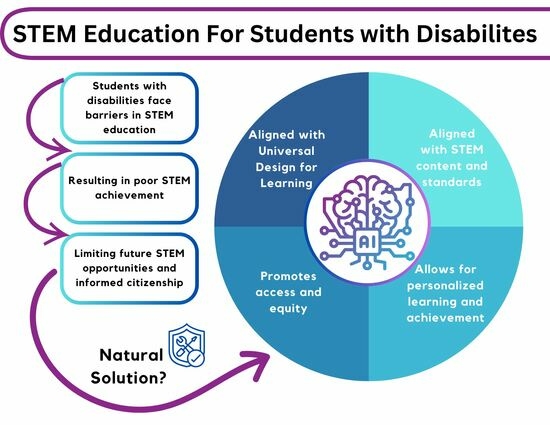
- Education: AI will power adaptive learning platforms that personalize curricula, provide real-time feedback, and offer specialized support for students with diverse learning needs, from text simplification to interactive virtual labs accessible to all.
- Workplace: AI tools will create more inclusive work environments. This includes intelligent meeting transcription services, AI-powered job coaches for skill development, and smart workstation setups that adapt to individual physical requirements, fostering greater workforce participation for people with disabilities. Explore resources on workplace diversity and inclusion.
- Healthcare: Beyond monitoring, AI will assist in diagnosis, personalized treatment plans, and remote care delivery, making healthcare more accessible and tailored, particularly for individuals with complex medical needs or those in remote areas.
- Public Spaces and Transportation: Smart cities will leverage AI for accessible navigation systems, intelligent public transport that announces stops and routes clearly, and smart infrastructure that adapts to user needs, such as automatically adjusting pedestrian crossing times.
Empowering Independent Living and Workforce Participation
The core promise of AI-powered accessibility tools for 2025 is the enhancement of independent living and the broadening of opportunities for workforce participation. By automating routine tasks, providing real-time cognitive and sensory support, and facilitating seamless communication, AI empowers individuals to take greater control over their lives, pursue education, secure meaningful employment, and engage fully in their communities. This shift from dependence to autonomy is perhaps the most profound impact of AI on the disability community. It's about enabling choice, dignity, and active contribution to society.
Frequently Asked Questions
What are AI-powered accessibility tools?
AI-powered accessibility tools are software or hardware solutions that leverage Artificial Intelligence, including machine learning, natural language processing, and computer vision, to help individuals with disabilities navigate, interact with, and understand the world around them more effectively. Unlike traditional assistive technologies, AI tools can learn, adapt, and personalize their support in real-time, offering dynamic and highly individualized assistance across a range of disabilities, including visual, hearing, cognitive, and mobility impairments.
How will AI change accessibility by 2025?
By 2025, AI is expected to revolutionize accessibility by enabling hyper-personalized assistive technologies that adapt to individual user needs, significantly enhancing independence. We anticipate widespread adoption of advanced real-time captioning, intelligent navigation for the visually impaired, proactive cognitive support for neurodiverse individuals, and AI-driven smart home environments. The focus will shift towards predictive assistance, seamless integration into daily life, and the creation of truly inclusive digital and physical spaces, moving beyond basic accommodations to transformative empowerment.
Are there ethical concerns with AI accessibility?
Yes, significant ethical concerns accompany the development of AI accessibility tools. Key issues include the potential for algorithmic bias, where AI systems might inadvertently exclude or disadvantage certain groups if not trained on diverse datasets. Data privacy and security are also paramount, as these tools often process highly sensitive personal information. Furthermore, ensuring that AI development is conducted with inclusive design principles and in collaboration with the disability community is crucial to avoid creating tools that are not truly beneficial or that may perpetuate stereotypes. Transparency and accountability in AI design are essential.
How can I stay informed about new AI accessibility tech?
To stay informed about new AI accessibility technology, regularly follow reputable technology news outlets and disability advocacy organizations that focus on innovation. Subscribe to newsletters from leading AI research institutions and accessibility tech companies. Attend virtual or in-person conferences and webinars on assistive technology and AI. Engage with online communities and forums dedicated to disability tech, and explore academic papers or industry reports from organizations like the W3C (World Wide Web Consortium) or the Global Initiative for Inclusive ICTs (G3ict). Many tech giants also publish updates on their accessibility initiatives.

0 Komentar